

Part 1
The Queen had a little dog named Rex. Rex was usually a good dog, and he had only a few rules he had to obey. One rule was that he was not allowed off the red carpet that was under the Queen’s throne. Sometimes, however, Rex became interested in something elsewhere, perhaps a butterfly outside the window, or a bug on the hall floor. If this happened, he would run off the carpet, presumably towards whatever it was that had interested him. At this point the Queen would make a clicking sound with her tongue, and Rex, hearing the click sound, would run right back to the throne and sit quietly.
The Queen loved to go and visit her art museum. It was her own museum, she picked out the pictures, and her soldiers guarded it. The museum had lots of different paintings by many different artists, but she couldn’t help but favor the dog portraits painted by T. Slocum Benderschmidt, who was famous for dog portraits.
And so Rex loved the Queen, the Queen loved Rex, and that little dog was never scolded or shouted at, and he was friendly with everyone.
Rex loved to go with the Queen to the art museum, the room of the dog paintings was his favorite room, but he was not that interested in the flower paintings, or the portraits of the famous men. He was patient when the Queen examined, for the thousandth time, the miniatures of insects and butterflies, some painted so perfectly that visitors thought they were the real things.
Then there was the room full of paintings of lions and tigers. Rex did not like the room with the lions, and you could not get him to go in there except on a leash, and even then you would have had to drag him in, his four legs perfectly stiff, even dragging the rug along with him. If Rex was not on the leash, then he would run in the opposite direction, going into the naked ladies room, the room with the suits of armor, and even the room of the modern sculpture.
On this particular day Rex became lost in the Egyptian mummy department, and could not find his way back to the room the Queen was in. Being lost in the museum did not upset little Rex, because he had been lost there many times before, and after a while one of the guards, or even one of the visitors would always find him and bring him back to the Queen. Usually the Queen would just click her tongue when Rex was missing, and he would come running, but this time, he was too far away.
Everyone was anxious to return Rex to the Queen because they would be awarded with a gold coin for their trouble. As a matter of fact, often dogs that were similar in appearance to Rex were brought to the queen by accident, in anticipation of the reward of the gold coin, but it was easy to spot the difference because one of his back paws was a curious dark brown color. People bringing wrong dogs to the Queen were often rewarded with a silver coin for their trouble.
This day was different however, because no one happened to find him, so he simply decided to go home by himself to the Palace. It was a hot day, and the museum doors were wide open, nobody noticed him exit the museum and head toward the palace. Or what he thought was the palace… Now it must be mentioned that there is something very odd about this museum. The architect who designed it decided to make it perfectly square. It was probably the only symmetrical building anywhere, excluding the pyramids. Since it was symmetrical, each side had an entrance in the center, and all the entrances were exactly identical. The Queen had suggested to the architect that he put some ornament over each entrance, but the architect refused the Queen’s request, even daring to raise his voice and throw his pencil down on the drafting table in consternation, but the Queen did not call him a blockhead or anything like that, she just shook her head and said something under her breath that nobody heard.
It is a curious fact that architects, artists, and composers of music can argue with a Queen, and even sometimes say something rude. They are the only ones afforded this privilege, along with idiots, fools, and simpletons.
Anyway, little Rex, when he went out of the entrance and headed home, thought he was going out the front entrance, when in fact he was going out the back entrance. There was no way for poor little Rex to tell the difference, so he trotted to the sidewalk none the wiser. Once he was out on the sidewalk, he turned left when he should have turned right. He had no idea he was going the wrong direction! Both the castle and the museum were in the expensive part of the city, and so all the houses looked similar, even so, like most dogs Rex was nearsighted, and so the various houses looked all the same to him. If he noticed something strange about the trees, mailboxes, and bushes, he was unable to put his paw on it.
Eventually he came to a bridge over a river, of course he knew he had to cross a bridge on the way home, however he was confused when he stopped to examine the bridge railing, because it was black, instead of dark green as he remembered. Why was it a different color, did the painters come and paint it while I was in the museum, he wondered? Then suddenly he realized something didn’t smell right. As a matter of fact, everything all along the way did not smell as it was meant to, so he came to the only conclusion possible; he must be dreaming.
He could remember other times he had strange dreams. Once he had a dream that he was a horse, and another time he dreamed he was the Queen, and the Queen was a little dog. In that dream, he woke up suddenly, because the queen had turned from a dog into a cat, and that was obviously impossible. Like in his previous dreams, he knew what to do. He walked off the bridge, found a tree, curled up in the shade, and fell asleep, certain that when he woke up he would be back home again and ready for breakfast.
Rex woke up in the morning because his alarm went off. He had a clock in his head and the clock had 3 settings, breakfast, lunch and dinner. There was also an alarm that went off at half past each of those settings. So, he woke up at half past breakfast, and was very surprised to find that he was still in the middle of the same dream, but being a highly educated dog, he soon realized he was not in a dream after all, but was lost, as lost as a dog belonging to royalty could be.
Even so, he was not the least bit scared because by now the Queen’s entire army would be out searching for him, not to mention the townspeople who knew that there was a reward for his return. All he had to do was wait.
Far away, back in the Palace, the queen, worried about Rex, kept making her clicking sound, and out in the town the various people were walking around also making the sound just like a bunch of chickens, but Rex could not be found.
It just so happened that the entire day went by and Rex came across no people, and no people came across him. He got further and further away from the town, out into the part of the countryside where all the farms were. The only time he had been out in the country was in the Queen’s carriage, and he would poke his nose out the window and examine all the interesting smells in the air. Having traveled in the countryside before, he expected he would be able to find some lunch very easily and he was quite correct.
The first person he came across was a young girl working in a vegetable garden in the front of her house. Her name, I happen to know, was Sarah, but I do not know how old she was. She did know how to add and subtract, but she did not know how to divide. Also, she could do multiplication to 4 times 4 but could not yet do 5 times 5, so you can figure out her age for yourself.
She was a blond child whose mother had put her hair up in pigtails. She was dressed in overalls. Rex went up to her and poked his nose into her forehead, because she was kneeling in the garden planting radishes. She felt a very cold spot in the middle of her head, and looked up suddenly.
Rex took two steps back and then two steps forward, then he took another two steps forward and back. If you are familiar with dog language then you know that this is translated into English as “I want to play.” The child who knew addition, but did not know dog language, guessed the meaning, and so she knocked Rex over into the dirt of the garden. Rex jumped up anxious to be knocked over again; he also ran around in three circles and then licked Sarah’s face all over. In this way the two became friends. When Sarah went into the house for lunch Rex went along with her. And so it came to pass, the Rex, who was the Queen’s beloved dog, became the property of a farm girl for a period of time.
The Queen’s Dog Rex
Conclusion
As you perhaps remember from the first part of our story, the Queen’s dog has run away. Little Rex was found by a farm girl, who adopted him and named him Ralph. After the adoption an entire month went by, and then two months, and then three. After three months had passed Rex had very nearly forgotten that he was the Queens’ dog, and had more or less become the dog of the farm girl who could do division. She was three months older, and so had learned division in the school for the farm girls and boys.
All during this time the family taking care of Rex expected to discover whom he belonged to, and were certain that he did not belong to them but to some unknown person. They even went so far as to put an ad in the Lost and Found Dogs section of the newspaper, but it was the farmer’s newspaper, something Royal families would never read, so nobody in the town found out about where Rex had disappeared to.
Meanwhile, back at the Palace the Queen had been very upset for many days, and even after a month went by, she was still not quite herself. It was observed that she was often sad, and even if someone were to tell a joke and get her to laugh, even so, after that, she would seem even more upset. But finally after three months, she began to get over the disappearance of her little dog, but still nobody would even dare to suggest getting a new puppy. Such a suggestion was sure to make the Queen absolutely furious, so nobody said anything about it.
Back at the farmhouse with the family and the girl who could now do long division, Rex gradually became a member of his new family. They did not call him Rex, because they had no way of knowing what his name was, but instead they called him Ralph. They asked him what his name was and he said, “Ralph, Ralph, RALPH, Ralph, so they shortened it to just Ralph.
Because of his new name, Rex almost forgot who he was, and tried his best to come when he heard the name Ralph called, especially if it was half past supper time.
One day, Sarah and Ralph were weeding the garden in front of their cottage when a government stage with important documents for the King and the Queen went by. That meant it was Thursday, and this event was no different than any other , except that when the carriage was a great distance away it slowed down, and then it stopped. This had never happened before, and Sarah felt a strange foreboding.
Sarah had noticed in the past that Ralph would sometimes act oddly whenever it was Thursday and the court coach happened to go by and now, as she stood there in the garden, the carriage turned around and came back toward the town. To Sarah’s amazement it stopped right in front of her garden, and the driver came down from his seat and addressed her saying. “Tell me young lady if there might be a place where a famished driver might find something to eat.”
“There is none such,” she replied, and continued weeding the garden. Little Rex ran up to the man and sniffed his boot, then he ran away, but turned and came back up to him. The man knelt down and scratched Ralph’s head like strangers so often do and he also began to compliment little Ralph, not neglecting to examine his back paw, which seemed to be an odd color. Then he arose, and with nary a thought of something to eat, turned his carriage around and headed for the palace.
The queen, when she heard a new report of the sighting of Rex, entered it into a ledger she kept concerning Rex, and then gave the courier a silver coin from a bag she kept under her throne expressly for that purpose, although after such a long time it has simply become a polite way for beggars to ask for alms, a thing the good queen was said to encourage. But there was something about this new sighting that aroused her interest.
Late in the summer, the farmers of Sarah’s village all got together and held a giant fair. All the various farms set up tables to display their very best produce. Awards were handed out for the best tomatoes, the best carrots, and the best garlic. Sarah’s farm always got the award for the best garlic, because it actually was the best, and also because it was the only farm to grow only garlic, and sometimes radishes.
The queen was in the habit of going to the fair every year, and so she decided to go, and first have a look at the dog her courier had mentioned, but to do this she did a most curious thing. She did not want to be recognized and so that afternoon she dressed as a commoner. Then, all alone, without even a single attendant, she walked to the cottage the courier had named, and there from a distance she observed her beloved dog, Rex, frolicking and playing in a garden with a young girl.
The Queen wept, and when she was done with weeping she wiped her tears and returned to her coach. The queen felt moved to the depths of the essence that was her soul, and why? She was moved in this way because all her life she had wished in her heart that she could have been a simple farm girl, unencumbered by all the pomp and ceremony that her position in the world made unavoidable every day. She hated the hours it took just to have her attendants dress her, and there were the state luncheons and dinners lasting long into the night with odious guests she could never stand.
And so, like so many Queens, and even Empresses before her she had constructed a farmhouse, with gardens and even a barn with cows goats and chickens where, as often as she could manage to get away, she would go and play the farm girl, and she even would go so far as to milk the cows, feed chickens and collect eggs wherever they could be found. And that is the simplest and most obvious explanation of why the Queen abandoned her beloved dog, for she thought that Rex was where he ought to have been, and she was not.
She felt no interest in the fair and so set off for home. She felt in her heart that she could not take her dog away from its new home, however, even so, as the cottage with her dog drew near and she spotted it in the distance, she asked her driver to stop, so she might take one last parting look, and as she gazed out of her window Rex suddenly recognized her and in that very instant she inadvertently clicked her tongue, by force of habit and despite herself and Rex leaped through the open window and the coach drove swiftly away. Once reunited with her dog, all her tender thoughts of the farm girl fled away as well.
Sara, watching from her garden, understood exactly what had happened, and now understood whom her dog belonged to, as everyone in the kingdom knew the Queen’s coach.
Then one week went by. People thought that Sarah would be upset, but she claimed that she was certainly grown up enough to know that you have to return the Queens’ dog to the Queen, and it was probably for the best. But Sarah’s teacher could see that she was really unhappy, because on two separate occasions, she got 4 times 4 wrong, and had difficulty for a while with division, which before she got perfectly, even with fractions.
But after a week Sarah received an invitation to attend lunch with the Queen at the Palace. Sarah’s mother stayed up all night sewing a dress for her daughter, but did not really need to because the Queen was the sort of person who would have preferred overalls, even if they had those brown spots on the knees you get when you are planting radishes.
The Queen sent a carriage for Sarah in the morning, and the carriage took her to the Palace. When the carriage pulled into the parking lot of the Palace, Rex was asleep under the Queen’s feet under her throne, but in a dream he thought he smelled the smell of radishes, and so he opened one eye and looked around.
A little later, as Sarah was coming up the long staircase that led to the Queen’s audience room, Rex began to think he could smell garlic, as well as radishes, and so he woke up and started looking all around.
Then Sarah appeared, way at the end of the hall that led to the throne room, and Rex jumped up, ran right past the edge of the red carpet, and all the way down the hall to Sarah. The Queen did not bother to click her tongue because she knew it would do no good, and everyone else seeing Rex had run past the carpet started clicking but Rex did not hear anything.
So the Queen invited Sarah to come to the Palace every Saturday afternoon, to babysit Rex, whom she now would sometimes call Ralph. Sarah was paid one gold coin a week, and given a permanent pass to the Museum.
The Queen said, “Do you like to read?” Sarah answered “Yes,” even though it was not her best subject, but she knew it was the answer the Queen wanted to hear. Sarah was therefore given a permanent pass to the library as well as the museum, and, having never seen anything like either place, she found the two very fascinating and so she began to work on a special project.
Richard Britell
For Elke M, April of 2021, During the covid, but after the trump
The Chocolate Cupcake
Part 1
Albert was already pretty old when he started working as a guard in the queen’s museum. He would have preferred to spend his days smoking his pipe and looking out his window. He had a notebook in which he marked down every time he saw a bluejay land in his cherry tree. He would write down the date and time of every sighting.
One day, some women were walking by his house and, seeing a bluejay, one said to the other, “Those are terrible birds. They chase all the pretty songbirds away.”
After that, Albert liked the bluejays even more, because he was a sort of gruff old man, the type of man about whom you might say, “He frightens the children.”
He didn’t want to work in the art museum, but his wife insisted, saying, “Then where is the money to come from for your tobacco?” So, seeing that it was a question of the art museum or his pipe, he applied for the job, and the queen hired him. The king said to the queen, “Isn’t he sort of a gruff old man? Don’t you think he might frighten the visitors away?”
“No,” said the queen, “and besides, guards should always be rough, and even frighten people. That is their job.” The queen and king argued like this a lot, but it was just “good-natured banter,” as some said. When the queen spoke to Albert about the job of being the museum guard, he still tried to get out of having to work, by saying, “Really, Your Majesty, I am just a humble tradesman, and I know not a thing about paintings.”
And the queen answered him, saying, “I don’t want someone who knows anything about paintings. Any simpleton will do. An ignoramus will do just fine. Now go and pick out your uniform and start work.”
“Simpleton? Ignoramus?” Albert said to himself in anger as he walked down the hall to the uniform room. It is interesting to note that people generally do not like people to agree when they are criticizing themselves.
So the next Monday morning, Albert began to work in the museum, sitting in a corner in a comfortable chair, in the room of the Paintings of Famous Men. It was a boring job just sitting there, because sometimes nobody came in for hours at a time, and even if they did he had been told that guards were not encouraged to talk to guests.
After a few hours, a young girl with pigtails, wearing overalls with brown spots at the knees and walking a small dog on a leash came, all by herself, into the room of the Most Famous Men. Seeing her, Albert said to her in his gruff way, “What do you want, little girl?” Turning to him, she replied, “I am here to look at the paintings, old man.” And with that she took out of a small bag a magnifying glass, and began to examine the painting in front of her, just as she had seen the queen do on a previous visit. Because, as you remember, this was Sarah, who now had the title of “Friend of the Queen and Walker of Rex,” who had been coming to the museum for a few weeks now.
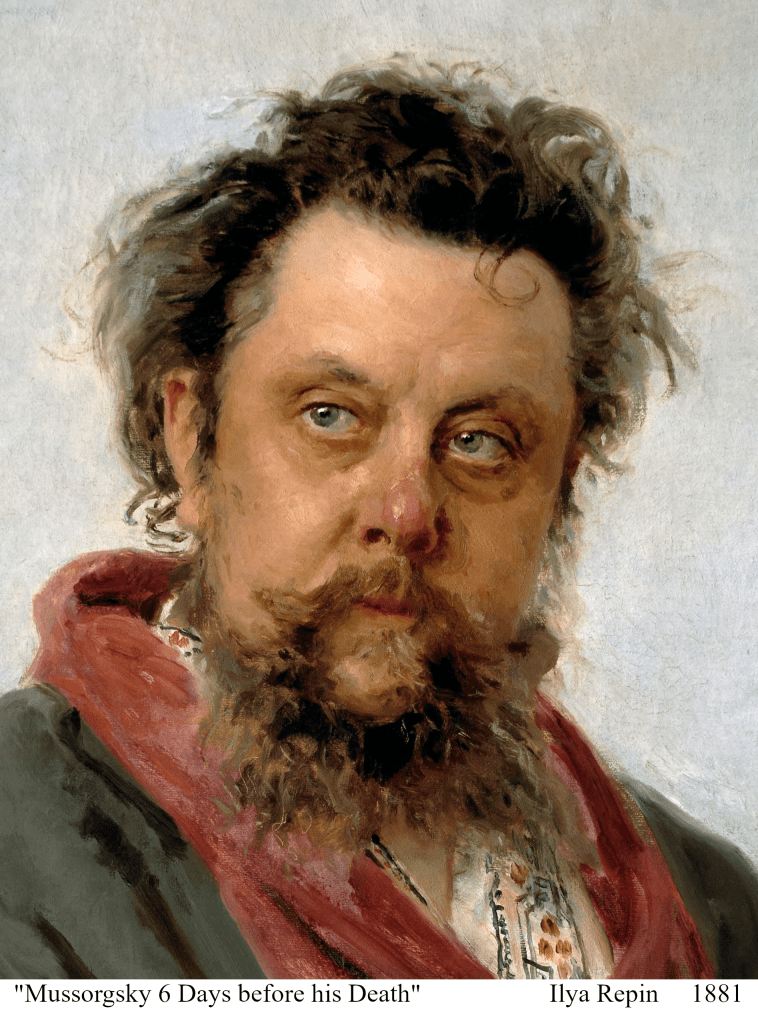
Albert, seeing that this new visitor was examining the name tag and reading its information with the magnifying glass, asked her, “And what is that painting about, young lady?” After having asked this question, he took a big bite of a cupcake that he had taken out of his lunch pail, because the clock just then struck ten. Sarah, using her most serious voice, began to read the tag, saying, “Portrait of Modest Mussorgsky, who died six days after this portrait was painted, after he won a contest to see who could smell dirty socks for the longest time.”
Albert was not expecting this answer, and it took him exactly three seconds to understand what his visitor had said. Then he began to roar with laughter, but unfortunately he was in the middle of swallowing a big bite of cupcake, so he began coughing and choking, and Sarah had to run over and pound him on his back to get his breathing straightened out. Then, after he got his breathing sorted out, Sarah pounded him on his back a few more times for good measure.
After that, he was silent for a long time, thinking. But periodically he would say to himself, “Dirty socks,” and start laughing again. And so, with the affair of the dirty socks began a friendship between Sarah and Albert, or the young lady and the old man, if you prefer.
That night after dinner, Albert pushed his chair away from the table, began smoking his pipe, and started telling his wife about his day at work, while his wife, with her back to him, set to washing the dishes in the sink. He told his wife about Sarah and the painting of Mussorgsky, and the dirty socks. Then he said, “Now, what I want to do is to make up my own description of one of those paintings, but I can’t think of anything.” Albert’s wife just shook her head, and said, “You are going to get yourself fired, you ignoramus.”
“Ignoramus,” Albert said to himself, as he sucked on his pipe.
Although Albert was unable to think of anything to say about any of the paintings in the room of the Paintings of the Most Famous Men, he loved to listen to Sarah’s descriptions of the various paintings in the gallery. As a matter of fact, Sarah’s made-up descriptions were much more interesting than anything anyone had ever written down at the bottom of any of the masterpieces. There was a copy of the Mona Lisa in the collection, which Sarah said was “A picture of a person trying not to sneeze.” Also, there was a large painting of one of the most famous popes of Rome sitting on a golden throne. Sarah began to read the description, saying, “Portrait of Pope Antonio the Fat sitting on the Toi…” but Albert shouted out and waved his pipe at her saying “No no, not about the pope,” because Albert was a devout Catholic and was afraid to hear anything he thought might be sacrilegious.
Often, when the clock struck ten, Albert would open his lunch pail and take out a snack. His wife always prepared his lunch in a metal box with a lid. One day when Albert opened his lunch box for his snack, there were two cupcakes and not just the usual one. Sarah, who was standing just behind his chair, noticed the extra cupcake but said nothing, because she had perfect manners, and she pretended not to notice it. Nevertheless, she loved to tease Albert, and as he was eating the two cupcakes she started to give him some advice. She said, “You know Albert, you don’t have to be bald. You can grow your hair back by pressing your pate against a birch tree for one hour each day.” Author’s note: ‘Pate’ is an old word for the top of the head, no longer in use, but Sarah found it in a book of folktales, and wanted to use it. Just to say ‘pate’ was the entire reason she told Albert about the birch tree baldness cure.
“That’s stupid and its not true,” said Albert.
“How do you know? Have you ever tried it?”
“You don’t have to try stupid things to know they are stupid, and what would people say if they saw me standing with my head against a tree?”
“A birch tree.”
“Why does it have to be a birch tree then?”
“Although Sarah was quick, she was unable to think of an answer to this question, so she made something up. “Because the ancients said it in their holy book.” But in order to not have to answer Albert’s questions about some holy book that did not exist, Sarah ran off, taking Rex with her, and went to look for a while at the room with the stuffed crocodiles that were displayed next to the Egyptian mummies.
Now Albert was a very superstitious man, and so he said to himself, “First of all, Albert, (Albert always addressed himself as Albert, as if he was some other person, not himself, giving himself some good advice.) “First of all, Albert, that rascal Sarah is just making fun of you and your bald head, and that is the only reason she was saying those things about birch trees. But the problem is that she did say it, and isn’t it pretty obvious that everything happens for a reason?” At that point in his thoughts he stopped, and took a look at a stone lying in his path, and he thought, “The stone can’t move by itself, but it will move if I give it a kick. Like everything in this world, nothing happens without a reason. Therefore, if Sarah told me to press my head against a birch tree, there must be some reason, some unknown reason, why she decided to say that, because a person can say any number of crazy things.”
“Also,” he said, unconsciously raising one finger in the air, “if birch trees do grow your hair back, it could never happen all of a sudden, but it would happen bit by bit, as you stood there, and so, one could perform a simple scientific experiment. One could find a birch tree, off the road, where nobody could see, and put one’s head on it for a moment, and if it was going to work, one would probably feel something stirring on the top of their pate.”
So Albert walked off the road, and found a birch tree, and put his head against it. And then something strange, miraculous and magical occurred, and you will find out what it was next month when you read Part 2.
The Chocolate Cupcake
Part 2
Last month we left Albert, the elderly museum guard, standing in the woods with his head against a birch tree. In his simplicity, he was testing the idea that doing so would grow hair on his head.
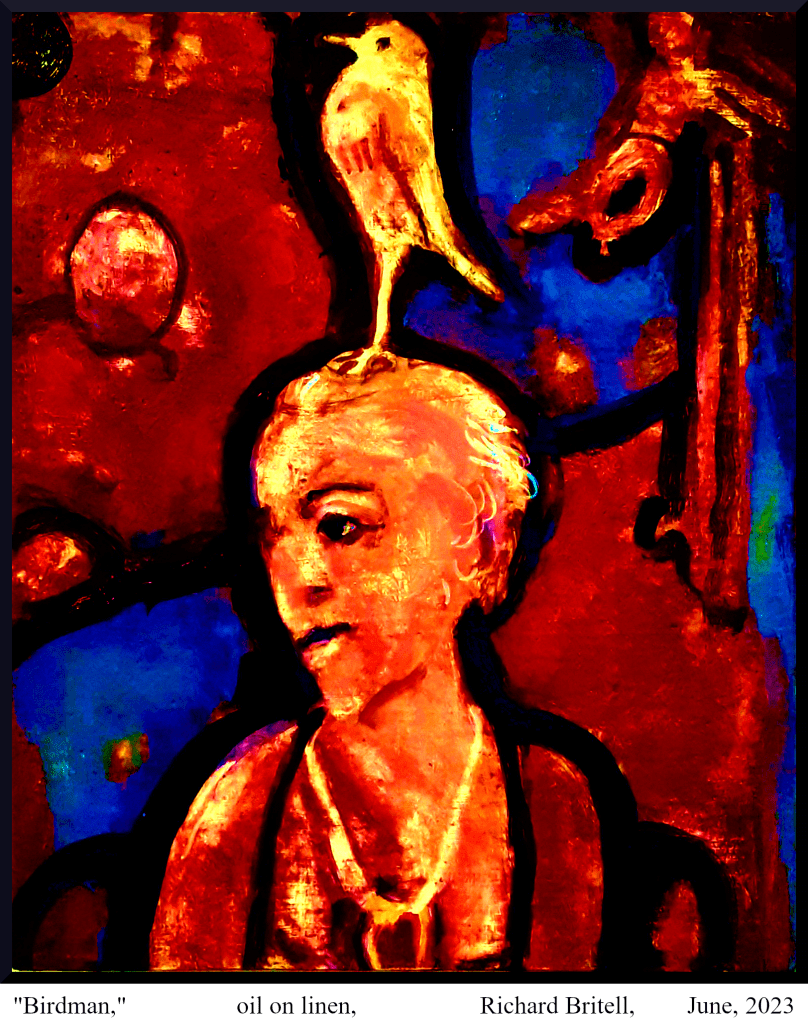
As he stood there a bluejay flew down out of that very tree and landed on Albert’s bald spot and pecked him with her beak right in the middle of his head, making a small hole, in which a spot of blood appeared.
Albert shook violently and felt moved to the depths of the essence that is his soul, and he said to himself, “This has nothing to do with hair or bald spots, but something to do with magic, and magical things.” And as if in response to this thought, thousands of crows began to crow all around, and then all of them, like one living thing, flew up into the sky in a big black cloud and flew away, cawing and cawing, into the distance. Albert staggered home, more dead than alive.
He opened the door to his cottage, and went inside, and his wife, whose name by the way was Bertha, said to him, “And how did Sarah like her cupcake then?”
When Albert’s wife asked him about Sarah’s cupcake, he did not answer her right away, because he had to lie about it, and everybody knows it always takes a moment to make up a lie, especially when you are not expecting it. So when Albert didn’t answer right away, she knew that the selfish old man had eaten Sarah’s cupcake, which she had made specially for her, because she had grown fond of the saucy child, and thought she was a good influence on her grumpy husband. Finally, Albert said, “Oh, she loved the cupcake very much and hopes you might make her another.” Hearing this obvious falsehood, Bertha stopped washing the dishes, sighed to herself, and then resumed her work. And so Albert saw that his lie was found out, but nevertheless his wife did not bother to criticize him, because she thought to herself, “What’s the use?”
The very next day Albert opened his lunch pail just a few minutes before ten, so that he could gobble up Sarah’s cupcake without her knowing about it, but he discovered that his wife had played a trick on him. Sarah’s cupcake had an S on the top of it, in frosting, and his had an A on it. His first impulse was to gobble up the S cupcake right away, but he thought to himself three things. One, he had lied about the cupcake. Two, his wife knew he lied, and although she said nothing she had marked this one with an S on purpose. And three, he felt ashamed of himself, not because he lied, but because his wife did not scold him. He looked down into his lunch pail and said to himself, “Oh dear me, apparently she thinks I am just a hopeless case.”
Just then, Sarah came up beside him and said, “So, it looks like I am going to get to eat my cupcake myself today. From then on, at ten o’clock, the two of them ate their cupcakes together every day, and Sarah brought the milk in a jug from her farm. The cupcake hour became a time when they talked about various things, because Albert had never gone to any school, and did not even know how to read. But Sarah, because of her hours spent in the queen’s library, was becoming highly educated in her own way. She would sit next to Albert and explain the world to him, but she was devilish and could never avoid the temptation to tell him outlandish, untrue things, just to test his incredulity, until at times he would cry out, “Now stop it Sarah! What do you take me for, an ignoramus?”
Meanwhile, some very strange things began to happen. First of all, the bluejay that had landed on Albert’s head began following him to work in the morning. At first it did not seem possible, and he assumed that it had to be a different bird each time. But finally, when it began to land on the museum window ledge in the very room Albert had to guard, he could see that he had acquired a pet bird that insisted on following him around. That was not the only odd thing. The guard in the museum room next to Albert’s began to listen in on their conversations. And the more he listened, the more upset he became, because he felt that their words – especially Sarah’s – showed a kind of disrespect of the museum and its collection, particularly when she made fun of and changed the words of the tags on the paintings. He was so upset about it that he almost complained to the king himself.
This other guard, whose name was Max, was not the only one unhappy with things in the museum. Poor Rex, whom we have hardly even mentioned, became jealous of Albert, and would sometimes even bark at him, because he missed all the attention he used to get from Sarah. Sarah would often sit on the floor with Rex and talk to him at length about what a wonderful dog he was, and how he was perfect and “just like Plato’s ideal, a perfect dog.” But Sarah found a simple solution one day that solved everything. She opened the window and let the bluejay into the room. The bluejay instantly flew over to Albert, pecked his head three times, and then immediately made friends with Rex, who welcomed this new playmate with open paws.
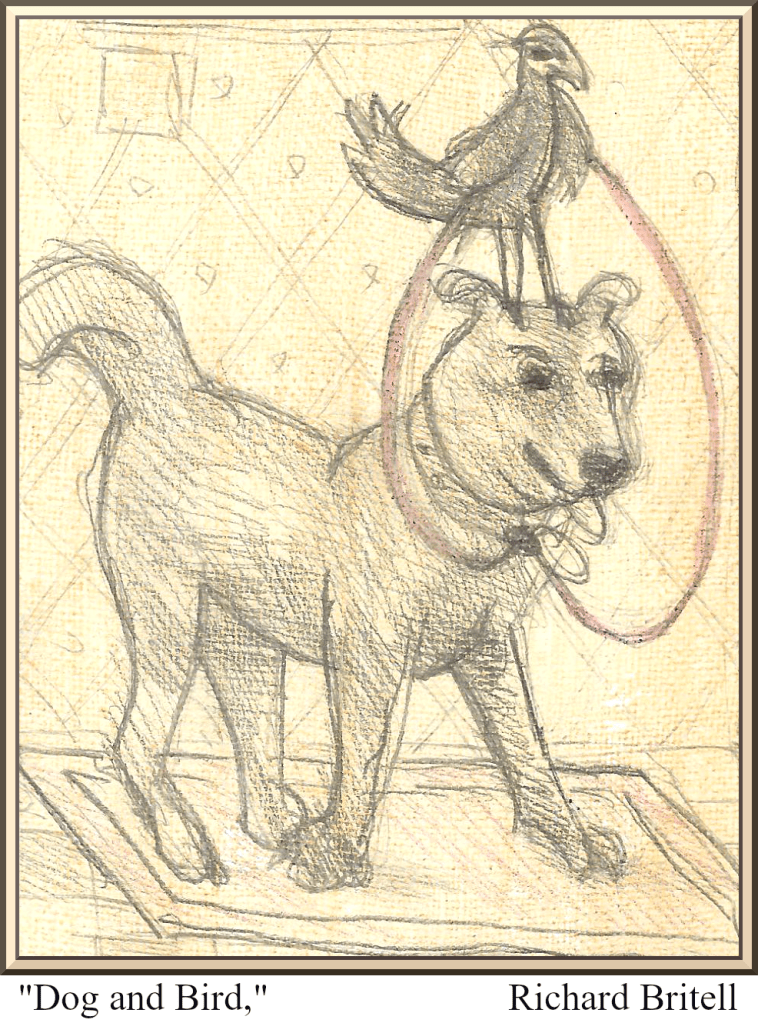
Now, while Sarah and Albert engaged in their interesting conversations, the bird and the dog would engage in various antics. I know it is probably difficult to believe that a dog and a bird might engage in the games these two engaged in, but you will simply have to believe me, and I will give you some examples. Sarah named the bird Toot, and Toot loved to ride around the museum on Rex’s back, as if Rex was a horse. To make him run faster, she would gently peck at his head, and to make him slow down, she poked him twice with her claw. To make him stop, she would hop up and down. That does not sound so unbelievable, but would you believe me when I tell you that they would pretend to fight? Toot would attack Rex, flying around him in circles and pecking him, and Rex would pretend to be afraid of the little bird.
Albert was constantly asking questions about the royal court. He wanted to know what kind of meals they had, and about their cakes and pastries. “What kind of coats and pants does the king wear, and is he fat or is he thin?” he might ask, and Sarah, who often had supper with the royal couple and even sat in on important meetings, would answer all his questions. These questions of Albert’s are not surprising, because it is an absolute fact that in a monarchy, the common people are fascinated with the habits and goings on of the king and the queen, and even of the members of the court. It is a thing very similar to our society, where ordinary people always want to know what famous people and celebrities are doing.
It is an odd custom when you consider that famous people and celebrities do not care one fig about what the common people happen to be doing. In a monarchy it is different because the royalty has to show some interest in the common people, since their survival depends on it. God forbid there should be a revolution, because in a revolution the royal people often end up as commoners. Or even worse, they end up no longer in this world.
And so she explained to Albert the strange fact that the king and the queen would pretend to argue, even in front of guests, and she would give examples, saying, “For the queen it is often a three-part insult, such as, ‘You’re fat, lazy and stupid!’”
“Fat, lazy and stupid,” said Albert, wondering.“A three-part insult. How interesting. I got a two-part insult once.”
“How so?”
“She said I was an ignorant simpleton.”
“Does the king do the three-part insult?” he asked.
“No, the king is more direct and uses fewer words. After the queen says something he doesn’t like, he takes a deep breath, and shouts out, ‘WRONG!’ at the top of his lungs. And then he smacks his hand with his fist, or stamps his foot.”
“Does the queen stamp her foot?”
“Never, but she folds her arms and then taps her foot, as if keeping time to music, and while tapping her foot she will roll her eyes and have a look at the ceiling.”
“Now, for example, I will be the queen, and you will be the king, so listen to this. ‘You’re a selfish, stingy glutton!’” she shouted.
“WRONG,” yelled Albert, and he banged his fist on the table. From then on, imitating the arguments of the king and the queen became a part of the cupcake hour, and Sarah would set the theme, because she was learning about government and its concerns.
“You are destroying the finances of the realm because you are careless, lazy and don’t even know how to add.” she might say, and Albert would scream out, “INCORRECT! It is your dresses and shoes that will lead the realm into bankruptcy.” Sarah was proud to see that Albert could improvise, because he had substituted “incorrect” for “wrong” But she didn’t mention it, being unsure if it was inventiveness or just his simplicity.
But to mock and to ridicule a Queen’s behavior is not without its dangers, and finally Max, the guard who had been spying on them, decided to lodge a complaint with the King.
The Chocolate Cupcake
Part 3
Max did complain about Sarah and Albert to the king and the queen that afternoon. His report did not go as he had hoped. He said, “Sire, the guard named Albert and that bad little girl who is always hanging around the museum, God knows why, are making fun of Your Majesties.” His first mistake was to address his remarks to the king, completely ignoring the queen as if she was not even there. The king did not respond, but the queen asked, “There’s some bad girl that hangs around the museum? You aren’t perhaps speaking of my dear Sarah, are you?” And as she said this, a very angry expression came across her face, and Max took a step back as he suddenly realized what a stupid thing he was doing.
“She makes fun of you and is not respectful of Your Majesty.”
“Do tell then, give us an example of the things she says.”
“She pretends to be you, Your Majesty, and she yells at Albert as if he was the king.”
“And so what does she say?”
Now Max was not a very bright person, but he suddenly thought things through in that moment, and he realized that he was about to imitate Sarah saying the king was fat, stupid, and lazy. But it did not matter one bit that he was demonstrating what Sarah had said, the fact was, he was about to speak things that might get a man thrown into prison, or worse. Yes, you see the queen understood what her Sarah was doing: a thing that is called “imitations” at the court, and like a crafty chess player she had cornered Max into a situation where he was unable to say even another word without accidentally insulting the king. Max shook all over with shame and fear, bowed his head and asked humbly to be excused.
Max closed the doors to the audience room and walked away down the hall, and he was confused by the sound behind him of the king and the queen’s loud laughter, because there is nothing funnier to a king and a queen than their game of imitations. Try it some time with someone you know well, and you will see exactly what I mean.
Then the king said to one of his guards, “Guard, summon Sarah and that old man, whoever he is, to the throne room AT ONCE THIS INSTANT!”
Meanwhile, back in the museum, in the room of the Paintings of the Most Famous Men, the dog and the bird were playing tic-tac-toe on the parquet floor, using twigs for Xs, and cherries for Os.
A palace guard went to the museum and ordered Albert and Sarah to appear in the throne room AT ONCE. Albert became terrified, but Sarah had a notion of what it was all about, and so she was not especially concerned. She considered that she might get a scolding from the king, but nothing else. But for Albert, it was a different matter. He knew almost nothing about the king, the queen and the court, and had often heard people gossip about the terrible punishments that were given to people who might have insulted the royal couple. These stories were not true, but that made no difference.
Sarah and Albert headed for the palace, which was quite a distance from the museum, but Albert kept falling behind and Sarah had to stop and wait for him to catch up. Finally Albert simply couldn’t go on, and he stood stock still in the middle of a hallway of the palace, trembling all over with fear. Sarah went up to him and tugged at his sleeve to get his attention. Then she said to him, “The king is kind, the king is good, and the king is just. Repeat that after me.” And Albert did as he was told. Sarah made him say it a second and a third time. Then she explained to him, “What you have said is the truth, so have no fear.” And with another tug on his sleeve, they started up the staircase that led to the king and queen’s audience room.
As they entered, the queen said, “Now young lady, what is this we have been hearing about you making fun of the king and myself over in our museum? It’s not possible that it could be true, is it?” The queen said this to them with a mischievous smile and a look at the king.
“I’m afraid it might be true,” said the king to the queen, “and so I think we must investigate.”
Sarah bowed her head and said in her smallest voice, “It’s true Your Majesty.”
“What?!” shouted the king.”
“It’s true, Your Majesties, but we did not mean to be disrespectful,” Sarah said in a slightly more confident voice. Then the king demanded, “Give us an example of what you have been saying about us.”
“All right,” said Sarah, and as she took a pose with one foot extended, she began to tap her foot in time to imaginary music, she folded her arms, rolled her eyes, and looking at the ceiling she said, “The king is fat, lazy and dumb.”
“Wrong!” shouted Albert, and he smacked his hand with his fist.
The king was overcome with pleasure to see himself so well imitated, but Sarah, turning to Albert said, “And so then, what is the king?”
Albert, having no idea what he was supposed to say, stood there confused, but Sarah waved her hand at him, and nodded her head till he understood and shouted out, “The king is kind, the king is good, and the king is just.”
“Just what?” Sarah asked him.
“Just, just, just… just a little fat, as I am, and like a king and an old man must always be.”
Then the king, the queen, Sarah and Albert laughed till they cried, and laughed till they cried again.
And over in the museum, the dog and the bird, having finished the game of tic tac toe, started in on a game of checkers on the parquet floor, while some crows and pigeons sitting on the window ledge looked on. The crows wanted the bluejay to win, but the pigeons rooted for Rex, the queen’s dog.
The king and the queen invited Sarah and Albert to have lunch, and while they were eating the queen mentioned that on Friday evening there were theatricals in the court theater. At the theatricals, various members of the court performed short plays they had written. “Nothing longer than ten minutes,” the queen explained, “so the bad ones are over soon enough, and nobody gets bored.”
She also explained that the coming Friday was special because once a year the show was open to the common people, even though very few were ever bold enough to attend.
Then the queen made this proposal. She said, “I want the two of you to write a small play about myself and the king, in which you act out one of our arguments, and show the people how we scream at each other. Will you do it for us?” Albert was dumbfounded by this idea, but Sarah was silent and thoughtful, so the queen asked what she was thinking.
“Your Royal Highness,” she began, “I believe it might have been Max, the other guard, who came here to complain about Albert and me. He had your best interests at heart you know, because he thought that our behavior might be…” and here she chose her words carefully and continued, “misunderstood by some of the common people.”
“Sarah,” said the queen, “you might be right about that, but I so want you to do it. What would you suggest?”
“I think you should tell people our play will be about the king and the queen of Moldavia, and not about you. That way, there is no danger of it being misunderstood.”
“Moldavia? I have never heard of that country, where is it?” said the queen.
“I don’t know,” Sarah replied. “I read about it in a fairytale.”
So, Sarah wrote a play for herself and Albert, and she gave Max, the angry guard, a part in the play, which caused the queen to remark, “Sarah is the most thoughtful, smart and clever child I have ever come across.” And the king replied, “Absolutely,” banging his fist upon the table and pronouncing the word “absolutely” as four separate syllables.
Sarah wrote a play in one act. She had never done anything like it before, but her teacher in the farm children’s school helped her a little, and gave her a copy of a Shakespeare play to take home, to study the form. She copied her play out in pencil on paper the queen gave her, but there was the problem of Albert not being able to read, so she decided to teach him to read right away. When she suggested this idea to Albert all he did was tap his foot, fold his arms and look at the ceiling, so she gave up the idea for the time.
Albert memorized his part, and if he forgot anything he was able to make up substitute words, because the play was simple enough. They rehearsed with a setting consisting of a table and two chairs. The table was set with a tablecloth and place settings for dinner. The dinner had to be served by Max, who was to wear a chef’s hat and outfit, and stand on the side with a towel over his arm.
Under the table was a red carpet, and Rex had to sit under Sarah’s chair, but they were unable to get rid of the bluejay. If they attempted to shoo the bird away, the pigeons and crows, looking in at the window, created such a racket that they had to give it up and let her stay. Rex and the bird stopped their games during the rehearsals and watched everything with careful attention.
Richard Britell, July 2023
The Chocolate Cupcake
Part 4
The king and the queen invited Sarah and Albert to have lunch, and as they were eating the queen mentioned that on Friday evening there were theatricals in the court theater. At the theatricals, various members of the court performed short plays they had written. “Nothing longer than ten minutes,” the queen explained, “so the bad ones are over soon enough, and nobody gets bored.”
Then the queen made this proposal. She said, “I want the two of you to write a small play about myself and the king, in which you act out one of our arguments, and show the people how we scream at each other. Will you do it for us?” Albert was dumbfounded by this idea, but Sarah was silent and thoughtful, so the queen asked what she was thinking.
“Your Royal Highness,” she began, “I believe it might have been Max, the other guard, who came here to complain about Albert and me. He had your best interests at heart you know, because he thought that our behavior might be…” and here she chose her words carefully and continued, “misunderstood by some of the common people.”
“I think you should tell people our play will be about the king and the queen of Moldavia, and not about you. That way, there is no danger of it being misunderstood.” Sarah said.
“Moldavia? I have never heard of that country, where is it?” said the Queen.
“I don’t know,” Sarah replied. “I read about it in a fairytale.”
So, Sarah wrote a play for herself and Albert, and she gave Max, the angry guard, a part in the play, which caused the queen to remark, “Sarah is the most thoughtful, smart and clever child I have ever come across.” And the king replied, “Absolutely,” banging his fist upon the table and pronouncing the word “absolutely” as four separate syllables.
Sarah wrote a play in one act. She had never done anything like it before, but her teacher in the farm children’s school helped her a little, and gave her a copy of a Shakespeare play to take home, to study the form. Albert memorized his part, and if he forgot anything he was able to make up substitute words, because the play was simple enough. They rehearsed with a setting consisting of a table and two chairs. The table was set with a tablecloth and place settings for dinner. The dinner had to be served by Max, who was to wear a chef’s hat and outfit, and stand on the side with a towel over his arm.
Under the table was a red carpet, and Rex had to sit under Sarah’s chair, but they were unable to get rid of the bluejay. If they attempted to shoo the bird away, the pigeons and crows, looking in at the window, created such a racket that they had to give it up and let her stay. Apparently, the pigeons and the crows believed that Rex and the bluejay were going to be in the play, and for this reason they all had purchased tickets to attend. Tickets consisted of leaves from Albert’s cherry tree. Rex and the bluejay had been selling the tickets to the birds, charging one olive per ticket, or two cherries. I did not know about this at the time of the performance, and only found out later, after I had learned to speak Bird.
And so the evening of the theatricals came. Everyone was extremely excited. There was a printed program, and it even had advertisements. Sarah was surprised to see that her play was listed last in the evening. The front seats were all taken by royal relatives and people of the court. Back further were the people from the city, and at the far back and up in the balcony sat some people from the countryside, including Albert’s wife Bertha and Sarah’s parents, who sat together with Bertha. The queen had sent a carriage for them at the last moment.
The theater itself was a grand affair, with a high ceiling and, high up, what are called clearstory windows. One of these clearstory windows had been left open, and little by little the rafters began to fill up with hundreds of crows, pigeons, hawks, wrens, and even an owl. The owl had a pad and a pencil, and was said to be an important bird theater critic.
When it was time for “The King and The Queen of Moldavia”, it was announced by a trumpeter and a herald. The theater became silent; you could not hear a bird chirp.
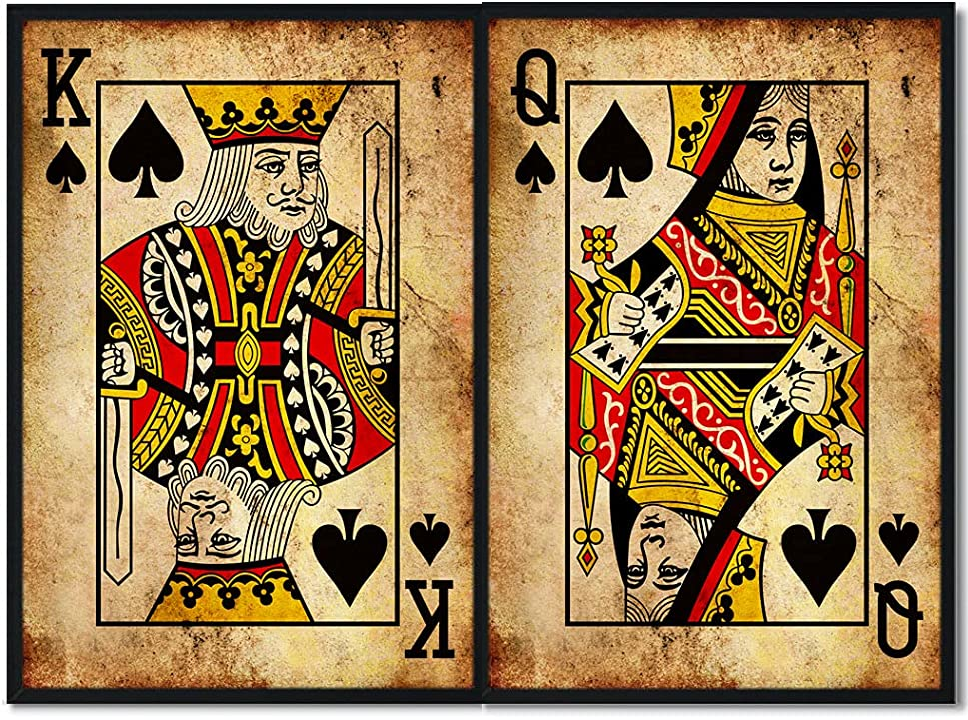
The curtain came up and the audience saw a table set for supper, with a white linen tablecloth. Albert sat on the right with a red paper crown on his head, marked with an M and a K, the symbol of the King of Moldavia. Sarah sat on the left, with a smaller red crown marked with an M and a Q, for Queen of Moldavia. Under their table was a red carpet borrowed from the museum. On the carpet, seemingly taking a nap and curled up by her feet, was Rex, who knew he was not allowed off the carpet and next to him sat the bird.
The play began with the royal couple arguing about the finances of the kingdom. The audience found it funny, especially when, after the queen criticized the king, he pretended to pull what was left of his hair out with both his hands, in consternation. Then they argued about the king’s diet, because the queen felt that he was simply becoming too fat. She was just screaming at him that his clothes did not fit him any longer, when a most strange thing happened under the table.
There was a red thread on the red carpet that you would never have been able to see, even if you were under the table yourself. The bird had placed it there; it was part of her act, planned out carefully in advance by the dog and the bird in preparation. She picked up the thread in her beak, hopped out to the edge of the stage and took a little bow. People in the audience said, “How odd. How peculiar.” Meanwhile, the king and the queen – that is, Sarah and Albert – began to argue about dessert.
Then the bird hopped back to Rex, put the red thread on him, got up on his back and started to ride him, just like a horse, out to the very edge of the red carpet. Then Rex also took a small bow, and people in the audience said, “How is this even possible?” Up in the rafters, the birds became very restless, and many began to hop up and down and even squawk in anticipation. The owl adjusted his spectacles and jotted notes down in his pad.
Above the table, Max, who was playing the waiter, brought out the dessert, consisting of one chocolate cupcake with chocolate frosting. There was just one, because the king had been in the kitchen when they were baked, and he had eaten up all the others. The queen knew it, and she was shouting at him, because he wanted to eat the last one, even though it belonged to the queen. The king was shouting at the queen, saying, “Your Majesty, you don’t like cupcakes, and you never ever eat them, so you want to eat it just to SPITE me.”
“Spite you!” shouted Sarah at the pretend king, and she was trying to remember what to say next when Rex took hold of the table cloth, tugged it, and the cupcake fell onto the floor, at the edge of the carpet. Rex instantly ate the cupcake, paper and all, and licked up the frosting on the floor, and the bird immediately pecked up every crumb, just as the two of them had planned. The birds in the rafters went absolutely crazy, crowing and chirping and hopping up and down and flying around in a frenzy, and the audience also began to scream and shout all at once. The children who had been asleep woke up in astonishment and began to look around in wonder. Rex and the bird rushed back under the table and curled up, pretending to be asleep.
Sarah then said to Albert, “Eat the cupcake if you must, but don’t complain to me when the buttons pop off your coat.” The king reached his hand out to fetch the cupcake but there was nothing whatsoever on the table. He looked all around, and so did Sarah, but there was no sign of any dessert, not even a crumb, although it had been there just seconds before. They looked all around in astonishment, and even Max looked under the table and, seeing nothing, just shook his head in wonder.
The audience went berserk, it was absolute pandemonium. Every person in the audience had seen what had happened, and they all wanted to tell the actors about it, but there was so much shouting and screaming that you couldn’t understand a single word. It wasn’t until the next day that Sarah and Albert found out what had happened to the cupcake, and yet there was nobody who realized that it wasn’t just a strange accident.
The next morning the birds’ weekly newspaper came out, and all the birds bought a copy. They read all the bird news and gossip, and on the last page they found the owl’s review of Sarah’s play. He praised the acting of Sarah and Albert, and praised even Max. He had some positive words for the writing of the play itself, and then he wrote, “Let us not overlook the important message of Sarah’s play. Those who rule us sometimes do not know or understand even the most simple and obvious things, even when the population shouts out the truth to them. But we birds, and sometimes even a dog, will know what’s true. And why? Because we birds are simple, and we soar high above like the gods, and looking down, we see and understand everything.
Richard Britell, composed for Elke M. in December of 2021
The Prodigal Dog
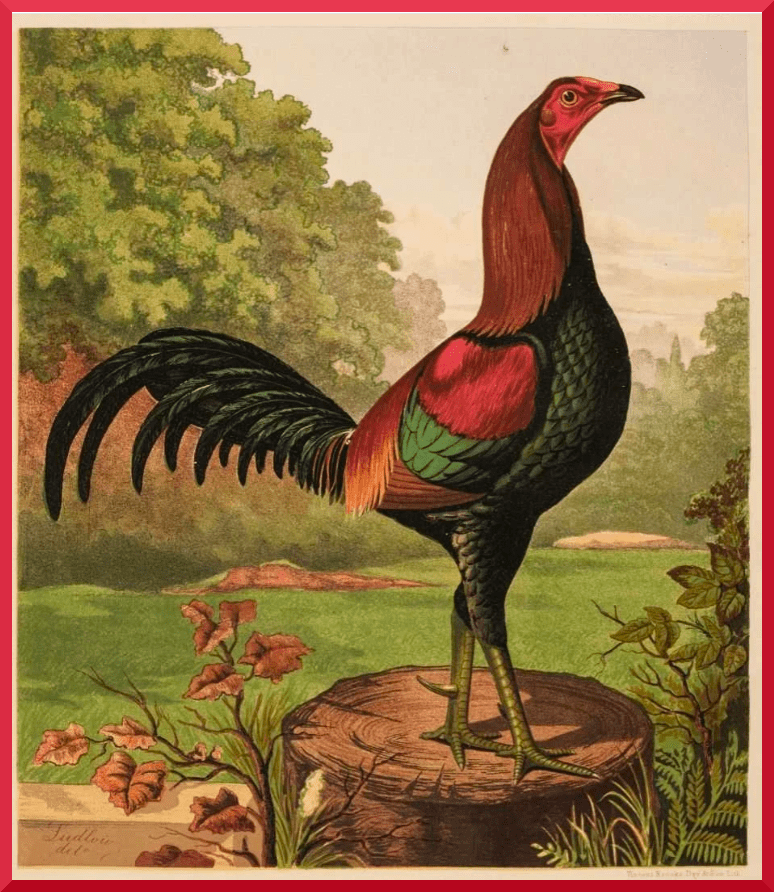
The Prodigal Dog
Part 1
Four years after the theatricals that were such a great success for Sarah and the queen’s dog Rex, a disaster struck the queen’s realm, and created a crisis for her reign, which heretofore had been both peaceful and prosperous. It was not a matter of famine or plague, it was not a revolution, or any war with a neighboring state. The disaster was – Rex ran away from home.
Just why a disobedient dog should be the cause of the near downfall of the queen’s empire might seem strange, but her reaction, which at first was subdued, became more and more extreme as the days passed. At first, like before, the town people went about clicking their tongues, which was the sound Rex would respond to, and also the army did a thorough search of the countryside, but with no success. At the end of the month it was decided that Rex might have even crossed the border into a neighboring kingdom, and the queen’s request to be allowed to send troops across the border was met with skepticism, and then outright hostility.
The relationship with this neighboring state had, for a long time been amicable, but their king had been for many months reclining on his deathbed, and which of his many sons, and one daughter, was going to succeed him created a situation of uncertainty, which the disappearance of Rex exacerbated.
But before we can consider the diplomatic aspects of the situation, we need to address the question. What would induce little Rex to run away in the first place? To understand how it came about we have to first consider some aspects of well known dog psychology. Every dog, no matter how tame, well behaved, and beloved by its master always retains a longing for the wild life. In this regard, Rex was no different than you or I. Everyone wants to run away, all the time, from morning till night, and it is just a question of the intensity. Some people, when overcome by anxiety and dread of the coming hour, will take themselves off to the corner store and spend ten minutes shopping for a candy bar. Is the desire to hop a train, or board a greyhound bus, regardless of its destination, to be assuaged by eating a Hershey Bar? Yes, and you know yourself that this is true.
This dormant desire in a dog can be aroused by subtle little things like a mouse that appears in the corner of a room and disappears a moment later under a bureau. The dog, watching the pathetic thing, which might be starving, just a mouse destined to spend his last days trying to get out of a barrel he accidentally fell into, nevertheless has the power, by the display of its obvious freedom, to ignite the longing to be free. This effect is slight and might only manifest itself in odd disturbing dreams. But then there are the sounds in the night, like a wolf crying its wounded heart out to the moon and stars, which tears away at the soul of the dog just like the windshield wipers in the middle of the night, keeping time to Bonnie Rait’s “Angel From Montgomery.”
It was not any mouse that caused Rex to want to run away from home, and neither was it a wolf in the woods at night howling at the moon. It was just a dog and a rooster that had run away from a circus.The dog belonged to a drunken clown named Raymond.
The clown Raymond stands in front of his audience in the circus ring. He points his toy gun at the sky and shoots. With his eye he observes a bird descend from the sky. He sends his obedient dog to retrieve the dead bird. The dog returns to his master with a rooster in his jaws. The rooster is limp, and hanging down from the jaws of the dog in that pathetic, spastic way birds have when they are dying.
Now, first of all, roosters do not fly, and so, the rooster in the skit was playing the part of a dead bird. To be convincing in his role, it was necessary to hang as limp as possible, and sometimes, for effect, to shudder a little, as if in imitation of the death throes of roosters. Roosters are very good at playing dead, the spectacle created by a dying rooster is so emblematic, so idiosyncratic, so theatrically dramatic, that it has been commemorated in important historic documents, and works of art and in fiction. It is the spectacle of the rooster running around after death, after his head has been cut off, that I am here referring to. This spectacle is unfortunately, the only real visual image that we poor human beings have of the terrifying idea of a life after death; what other image is there? So it is not surprising that we come across the image in ancient philosophical writing, consider for example, the last words of Socrates, “I owe a cock to Asclepius.” Why did the dear old man conjure up the cock in his dying words? Obviously because his mind was struggling to find a simple way to believe in a life after death, and his brain gave him only that painful and ironic image. Isn’t it true that when Christ was to be crucified, he just happens to blurt out, “Before the cock crows three times, one of you will betray me.” So, he too was looking in the files of his mental images for something that might convince him that death is transitory, and not an absolute, and he too, like Socrates, must have been entertaining the same visual image.
“But,” you say, “it was simply his way of indicating the early morning,” but then I ask you, why not mention birds chirping, or the golden rays of the sun? After all, doesn’t Homer give us his image of the new day with the wonderful words, “The rosy fingered dawn.” Now let us transpose Homer’s words to the biblical scene, just before Christ is to be crucified, we will now have him say, “Before the rosy fingered dawn arrives, one of you will betray me.” That phrasing would destroy the mood of the scene completely, because it lacks angst, it lacks terror, it lacks the ominous shroud of dread which only the word “cock” delivers to the narrative.
Even in great fiction we come across the rooster image as a harbinger of death, and so in “Crime and Punishment,” we find the old drunk Marmaladov, when he is run over and killed by a carriage, has in his pocket a gingerbread cock. So, you see, the rooster in our story was typecast for the role of the dead bird, and added to that he was also a master at his craft.
The dog’s name was Otis. His name had been shortened from Odysseus some years ago, but the fact that he had been given that name at birth was no coincidence as you will eventually see.
The little play that Otis and the rooster performed was very simple. Otis drops the dead rooster at the feet of his master but then unexpectedly, the rooster springs to life, and not only is he alive but he is furiously angry. He violently attacks the clown’s feet and legs. It is an important detail that the clown is wearing very short striped trousers folded up at the cuffs exposing his extremely white skinny legs. Not content with attacking the clown, the rooster turns his rage upon the dog, jumping on his head, and pecking his skull with frantic determination. Then the clown runs after the rooster with a boat oar, what the boat oar is doing on the ground is anyone’s guess and might have something to do with the Odyssey, but it is so huge and cumbersome that he stands no chance of landing a blow. All three of them end the skit running around in circles till they are exhausted, and finally all three stop suddenly, and sit down on a checkered blanket and enjoy a picnic lunch on the grass.
The skit of the resurrected rooster was a tremendous success, and that is an understatement. It did not matter one whit how many times a person might see that rooster suddenly jump up alive and torment his murderers, it never failed to arouse something powerful in the heart. It was the presentation in its simplest form of anger in the defiance of death, but in comic garb. It might often happen that some old man down on his luck, and weighed down with care, might just for a moment recall the defiant actions of that rooster, and so smile to himself and think that “Things are not that bad afterall.”
But the success of the skit was of no particular help to the drunken clown. He would have very much liked to get a well deserved raise, for the pleasure his dog and his rooster provided the audience, but, the circus manager, would not consent.
And so he did a disastrous thing, a thing immoral in the extreme, but like so many immoral acts, in his mind he presented it to himself as a logical, inevitable, and essentially good thing. What he did was sneak off into the woods at night with his trusting dog, and his obedient rooster, in search of a dog fighting, and cock fighting ring, where he had been a spectator in the past. What he had in mind at these bloody spectacles was not entirely clear in his mind, but money was his object, if only it could be procured without the death of either of his trusting pets.
What happened that night, when Otis almost lost his life, and was saved by the rooster at the last instant, we shall see in the next chapter.
Richard Britell, October 2023
Part 2
Into The Jaws of Death
When the clown brought his unsuspecting dog and the rooster to the cock and dog fighting ring in the woods, he only hoped to introduce his two companions to the audience as an entertainment. After their performance he planned to pass his hat among the crowd. Judging from the response from the circus audience, he hoped for some small reward for his efforts.
He did not plan to use the entire skit but only the conclusion, where the cock attacks the dog. That part of the skit had been expanded somewhat so that it could be presented by itself. The dog and the bird, intelligent beyond the clown’s meager understanding, were capable of keeping up their mock combat as long as the situation required. The audience loved the moments when the cock, riding on the dog’s back, would give a sharp peck to the dog’s hind quarters, just one simple sharp peck, and Otis would freeze in his tracks and assume that questioning expression so charming in a dog’s repertory of ‘looks,’ as if he had just heard some distant noise he could not fathom. Then, just a moment later, the bird would give the dog a good dozen pecks all at once.
When a mouse attacks a cat, who does not take the side of the mouse? The situation was especially of significance to young children. Some six year old in the audience, preoccupied with licking some chocolate from his fingers, or finding something to eat on his shirt would suddenly become struck dumb by the spectacle of a bird attacking a dog. There he might sit with his mouth open, and look on bewitched. Then, as the fight continues, the child begins laughing, and finally becomes hysterical and his eyes fill with the tears of delight.
We must also say something about the child’s mother, she is not really interested in the clown, or the dog and bird, she likes the gymnast who rides standing up on the back of a galloping horse, but there is nothing that gives a mother greater satisfaction the the unbridled and uncontrollable laughter of their child.
But not all audiences are the same, and what might entertain one group of spectators might simply confuse or offend another. The cock fighting ring had no six year olds, or indulgent mothers, far from it, just the opposite. Jaded elderly geezers, with saliva dripping from their chins, wanted to see suffering and death. So, when the rooster and Otis made their appearance unexpectedly, it aroused only mild curiosity. Their fight, perhaps comic enough, produced almost no laughter, and when it ended, Raymond’s attempt to pass the hat in the crowd was almost a complete failure.
After their short performance, Raymond walked among the crowd with his hat held out. The rooster jumped up on the edge of the wall that formed the enclosure of the tiny amphitheater, and stood there looking every which way, like birds always do. First he looked to the left and then to the right, then he looked up and then he looked down, and finding nothing of any particular interest to gaze upon he began scratching his neck with his left foot.
For the time being, while the hat was being passed among the crowd, and the rooster scratched his neck, Otis was left, unattended and forgotten, in the center of the ringpit.
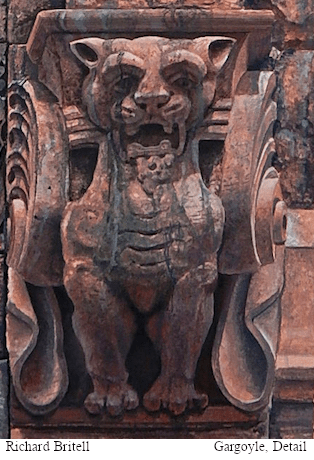
After a little while, a door opened in the wall of the pit. The door slid straight up with only a rusty scraping sound, and into the ring walked a small bulldog. The bulldog’s name was Max, and he was an especially ugly dog. He was a kind of dirty white color tending to yellow, and he had a lot of asymmetrical black and brown spots of various sizes. His spots were not the only thing asymmetrical about him. His wide mouth was also crooked and hung down in a sad way on one side as if he had suffered a stroke. Max, seeing another dog, walked over to him, as if to make his acquaintance.
Dear reader, I know that you are aware of what is going to happen next. You know that Max is going to attack Otis, and will attempt to kill him. But Otis has no idea in the world that this is about to happen to him. He is an innocent, an only child, separated from his loving mother not long after he was born. His only memory of her was a vague recollection of being carried about some meadow by the scruff of his neck. He never even had the pleasure of being attacked by brothers and sisters, whose playful wrestling would have prepared him for what was about to happen.
So Max leaped upon Otis, and seized him by the ‘scruff of the neck,’ and Otis had absolutely no idea what was happening. At first, as a matter of fact, he found the sensation to be pleasant, it somehow recalled a childhood memory, but after a second or two, when his adversary began to tighten the grip on his throat, he began to have difficulty breathing, and he finally understood, that something terrible was happening to him.
But nothing really terrible or frightening had ever happened to him in his entire life. On the contrary, the clown was always kind to him, and living in a circus, he was the favorite of the entire troup. Everyone loved him, everyone he met had a good word to say to him, he was constantly being grabbed by his ears, and having his head shaken back and forth and spoken to lovingly.
Otis could have very well defended himself, but he was in the throws of an existential crisis of the first magnitude. Death is always a far off reality, but when being struck by a bus is not some possibility, but a sudden reality, the mind stops functioning, and does not have the tools to comprehend the situation. So Otis reached the point where he could no longer breath at all, and still, the rooster stood there stock still on the edge of the wall, and continued looking this way and that, when suddenly, out of the corner of his eye, he noticed the predicament of his friend, and in that instant understood what job he had to do.
The Rooster plunged into action. He jumped from the wall onto the bulldog, and he dug his claws into his back. He made a careful examination of Max’s head. He noticed a little tan spot, about the size of an apple seed, and decided on that spot for his target. The spot in question was moving left and right, and up and down with great violence, but, choosing the exact moment, he drove his beak into the skull of the bulldog. The beak of a rooster is exactly three eighths of an inch long, as sharp as a razor, and it is said to be harder than carbon steel, of the type used in jet engines. The skull of a dog is exactly a quarter of an inch thick at its most dense aspect, and is no match for a rooster beak. So, the beak was able to penetrate into the dog’s brain by just under an eighth of an inch. It just so happened that the part of the brain the beak penetrated was a lobe, just in front of the occipital lobe, responsible for the creation of dreams.
The penetration of this part of Max’s brain caused his dream mechanism to fly into action, and so, for several seconds it seemed to him that he was standing in a big open field somewhere in the fjords of Norway, where he had never been in his life. He dreamed he was standing on a high cliff in a storm. There were thich dark gray clouds, so thich and so dark that it seemed to be the middle of the night although the dream was unfolding in the late afternoon. Though it was black as night all around, still everything was lit up by the constant flashing of lightning bolts that went on and off like a light bulb that is burning out, yet keeps on flickering. Then, right in the very middle of this terrifying dream Max was having, when in actuality in real life he was biting Otis’s neck, he was struck by lightning. It was one of those lightning strikes, where the flash and the thunder are not six or seven miles away, but the thunder is contemporaneous with the flash, signifying that the lightning had come down from out of the clouds to the very exact spot where he was standing. This sensation of being struck on the head by lightning, was created in his mind by a second, more violent, and deeper strike of the rooster’s beak.
Immediately after being struck by lightning in his dream, the rooster proceeded to administer the “woodpecker,” to Max. The woodpecker is a series of rapid violent strikes, about fifteen or twenty in the span of a second. During this brief period of time Max dreamed that he was repeatedly being struck by lightning over and over again, and when it ended he started to dream that he was at the roulette table in Monte Carlo, and had just won a hundred kroner on the double zero. In the middle of this pleasant dream he saw a strange white light that seemed to beckon to him at the end of a distant tunnel, and then he fell over dead, and Otis leaped out of the ring, and ran off into the woods.
Otis did not run very far, and the moment he felt safe, he sat down under a tree, thought about what had just happened, and decided he was going to have to run away from home.
Richard Britell, October 2023
Part 3
The Little Ballerina
After Otis almost lost his life in the dog fighting ring, it was a sad walk home through the woods to the circus encampment. Raymond and the rooster soon caught up to Otis who was walking along slowly. He had recovered from the fight, but he walked slowly because he was plunged in thought. Or rather, he was plunged into a state of mind, antithetical to thought. He was considering his entire life, and he was thinking, or rather feeling, that everything he ever believed was no longer true. He was asking himself absurd questions like this, ‘Is water really wet? Are things that are big, really big, or only big because we think they are big.’ These are the kinds of thoughts dogs think, and even people consider, when something terrible happens to them that they never thought possible.
Meanwhile, as the three of them walked along slowly, the clown kept up a continuous monologue, in the form of an apology to his pets, explaining his idea of what had happened to Otis. “It is entirely my fault, I know,” he was saying,”it was never my intention, and I would not have even considered the possibility of Otis being in a dog fight. Why, even if the ring master had offered me a hundred kroner, I would never have risked, never have allowed a hair of his fir to be pulled out.” But his apologetic chatter elicited not one word from his friends, neither of whom granted him even a grunt, to indicate that they were even listening.
“Not for a thousand, not for even ten thousand, would I consider…” but then he fell silent, because as stupid as he was, he could see the conclusion such a line of reasoning might lead to, and so changing his tone altogether he said, “It’s not about money, we are family, you are like my children, I would never let…I would no more pit Otis against a bulldog, than I would cook up Rooster for dinner.”
Finally Raymond fell silent, feeling that he was making a bad situation worse. They arrived home to their tent. It was almost morning. If you had been watching the scene from a distance, you probably would have thought that everything had returned to normal. You would have seen the three of them sleeping on the ground a few feet from their tent, under a tree, the clown using Otis as a pillow, and Otis with his head on the rooster.
In the morning Otis woke up and at first, and for a long while that morning, everything was the same as it had always been. Like every other day, he trotted around the entire circuit of tents and waggons that made up their little village, and then he went up a nearby hill from which he could see the village. It was at that moment, about 9:37 in the morning, that he suddenly remembered the revolting events of the previous evening, and shortly thereafter, at approximately 9:40 he decided to run away from home.
I have said above that he decided specifically to run away ‘from home,’ because those two words give his decision an important meaning. He was propelled into this momentous decision because of a sudden revulsion for his owner, it was the clown he intended to abandon, but it was his entire life and all the people in it he would be severed from forever, and it would all be replaced with what? It is one thing to abandon a person, but what is it like to abandon your entire life?
He was sufficiently troubled by this consideration, that he decided to visit his favorite friend, the daughter of the diminutive ballerina, who was one of the most important stars of the circus.
The daughter of the tiny ballerina was indeed one of those freaks of the natural world, and since she has an important part to play in this fable we will have to delay the departure of Otis for a few hours and discuss this young lady, the little ballerina’s daughter.
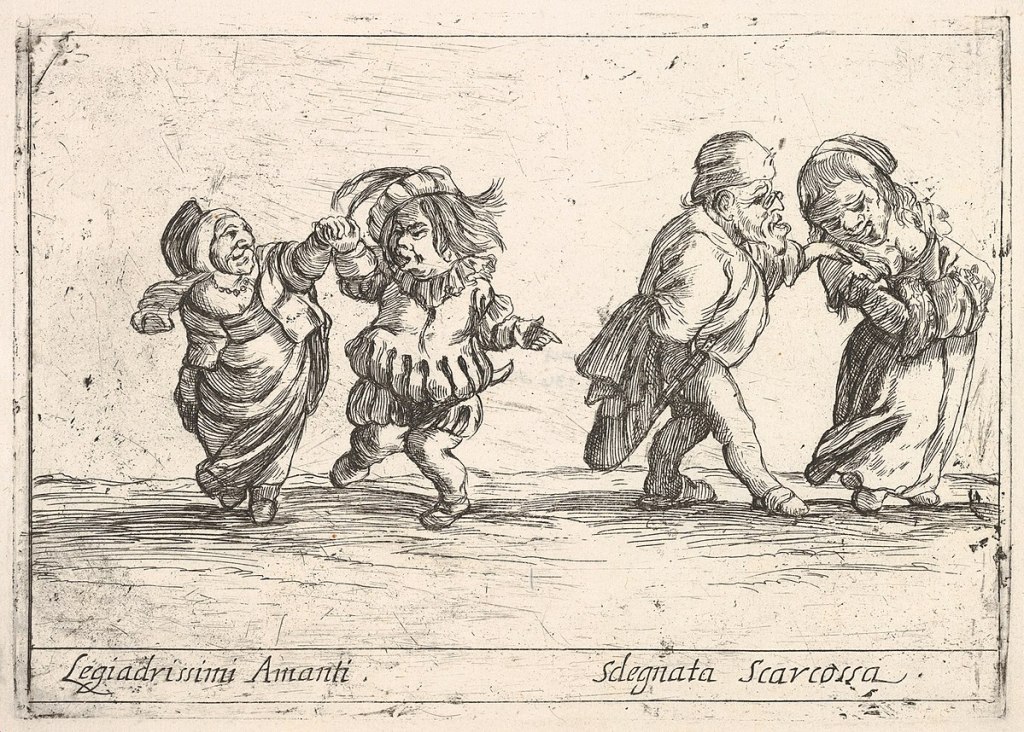
It is my intention to introduce her to you in exactly the same way she was always introduced to the audience at the circus. But first I have to say a few words about her mother. Her mother, or “Madge,” as she was affectionately called by everyone who knew her, was an important performer. Sometimes she appeared as a bearded woman, or as the tattooed lady, but regardless of the temporary beards, or the disappearing tattoos, she most often appeared as a ballerina, walking out from behind a crimson curtain, a curtain faded and blackened with age. She would come out from behind this curtain on the tips of her toes, with rapid little steps, and at the very edge of her stage begin to rapidly spin around on one toe, with the other leg very nearly pointing straight up and her knee pressed against her cheek. Then, from one side of the stage to the other she went through a series of movements almost too rapid to follow, ending with a double somersault. But Madge was so small and so rotund, that none of those various movements seemed to be possible for her awkward body to execute. Her pink and white outfit of a bodysuit and tutu looked like it was created for a person even smaller than she was, and was pulled in at the crotch and the armpits so tightly as to give her stubby arms and legs the appearance of pork sausages.
This pink and white costume was cut crosswise diagonally with a crimson sash, made from the same cloth as the crimson curtain behind her. When she stood still in the center of the stage, the color of her sash tended to combine with the color of the curtain behind her, and gave her the appearance of a little round person cut in half diagonally. One of her great skills was to move in such a way that the sash acted as a kind of semaphore flag, spelling out various letters and numbers. Those movements, combined with the silhouettes of her arms and legs which appeared as white shapes against the dark red background, made it possible for her to use her body to spell out words and phrases. Madge was not mute, but she acted as if she did not have the gift of speech, and so all her life, when in public she would answer questions with her body, her fingers and her gestures. Often, like in pantomime, it took a long time, and much shouting from her attentive audience to figure out what it was she might be trying to say.
One day a member of the audience shouted out, “How old are you,” and The Madge answered the question with her movements and gestures. That question was followed by another. A pregnant woman wanted to know if she would have a boy or a girl. After this question The Madge seemed to be confused, as if she did not understand the question. Then, using her body and gestures she spelled out her answer, but someone in the audience shouted out the word, “Neither!” This remark caused loud laughter from some rude persons in the audience.
Because of this peculiar accident The Madge very nearly lost her position with the circus, and for a while was relegated to cleaning up. Even so, the owner of the circus, who was an inordinately practical sort of person, realized that, regardless of the misunderstanding concerning the sex of some unknown child, fortune telling was an appropriate, and an even necessary feature of any traveling circus. The fortune telling that evolved from this misadventure was very novel. Answers to questions were acted out in pantomime, and the audience would shout out various interpretations. Madge would then simply select the reply that she wanted to use for an answer. No person in the audience, or for that matter Miss Madge herself, took any of the fortune telling seriously, but then, The Madge’s daughter began to interpret the clues, and select the correct replies. It turned out that this daughter was truly clairvoyant. She was so clairvoyant in fact, that she found it necessary to firmly deny having such an important skill.
Being clairvoyant is not as simple as everyone thinks it is. People say, “Well, if she was clairvoyant, she could just go to the race track, and win a million kroner, but since she can’t, that proves her predictions and prognostications are false.” No! The truth is that prophets are correct in predictions only when it truly matters, and to exercise such an important skill on a whim, or for self aggrandizement will often be found to produce the opposite result. The chosen horse comes in, not first, but lame. Saying it must rain, can produce floods. It is as if there was some actual power that bestows on a person the ability to predict, and this power is somehow conscious, and has some kind of moral convictions.
Valeria was only twelve years old when she accidentally established her reputation as a seer. She had a vivid dream, one of those dreams that appear to be more real than life itself. She had a dream that she was…
But now is not the time to introduce you to this remarkable person whose name was Valeria. We will get to that next month.
Richard Britell, December 2023

Part 4
Valeria
Previously in this chronicle, we have been introduced to Madge, the diminutive ballerina. She was three and a quarter feet tall, quite rotund, and yet she was adroit in all her movements, one might even say elegant. We can call this phenomenon an ‘absurd juxtaposition,’ that combinations of contradicting attributes, so essential to the carnival performer. But her daughter, Valeria, whose star power outshone her mother’s, was yet more strangely absurd. When her mother called her name, she would pull back the maroon curtain and present herself to the world, all seven feet of her, thin as an aspen sapling.
In the first instant, as the unsuspecting audience took in her form, there was a universal feeling of doubt, doubt bordering on complete disbelief. They felt they were being made fools of, even though it was a carnival where deception is expected. The spectators at first were simply annoyed at being fed such a ridiculous idea. But then something transformative happened, Valeria bowed to the audience and smiled. She smiled a woeful smile, full of an acceptance of regret. How else can I explain her smile, except with those words. It was the smile of a child who has stopped crying after a sound spanking, the smile of a small child determined to repeat the transgression, a smile of the inward acceptance of oneself, of self love.
But that was not the end of it. It is necessary here to actually describe the physical anatomy of her smile. The arrangement of her teeth was far from perfect, she had one tooth that might be said to be shy. Either it had not come in completely, or perhaps it had been chipped slightly. This little imperfection was made more prominent because when she smiled the lip above that tooth rose slightly higher, as if to call attention to the fault. The above clumsy description, the best I can manage, could never convey the wonderful charm of her childlike smile, and so I will end this description with its most important feature. Her smile had ‘goodness,’ such that having seen it one felt an odd pleasure that lasted the rest of the day.
But this smile was simply the introduction to her character, and her identity, because having presented herself to the audience, her mother then offered to the audience the very same smile, complete with the smaller tooth, adorned with the same cameo of the lip, slightly higher above the same tooth.
In that moment one could see that the two women shared the same history, the same genes, and the same ancestry. Valeria was indeed the little person’s daughter.
Valeria, like her mother, was clairvoyant, and was shy to the point of complete denial about her skills. Her ability, she knew, did not really belong to her, but belonged to a voice that spoke to her in her ear sometimes unexpectedly. She has no control over the voice, and the only control she exercised was that of a censor, because she sometimes simply refused to utter the various comments and observations she heard.
And don’t for a moment consider that she was simply personifying her own private thoughts. It was obvious to her that the voice knew a great deal that she could never know, words she had never heard, and remembered times, places and events she could never have experienced.
This voice in her head was like a close friend and a companion, and their relationship was not always harmonious, they even argued sometimes.
Valeria did not converse with this voice if there was any possibility someone might hear the conversation. She didn’t want to be thought of as ‘touched,’ or possessed, even though she knew she was. Valeria was proud of her abilities, and yet at the same time ashamed of her abilities. Proud, because she knew in her heart that she was a superior being, unlike anyone else, and certainly connected to other beings of great importance in history going back to Pythia.
At the same time she longed to be just another ordinary person, not forever severed from everyone, even her mother and her three sisters, all of whom were just 39 inch tall circus performers. She especially wished she was not so ridiculously tall and thin, so that, even from a distance, strangers would stare at her and make comments under their breath, imagining that she did not know what they were saying about her.
But although she suffered a profound alienation, her suffering was at least ameliorated by her connection to her best friend, a being that, although invisible, talked to her like an ordinary person. The voice was not in her head, but outside somewhere, and so real that she was always surprised that others did not hear it, although dogs, cats, and even other small animals, she could see for herself, responded to it. They responded with confused caution, because although animals could hear the voice, there was nothing to be seen.
One day Valeria and her voice were walking on their path in the woods. They almost always walked along the same path. The path was bordered left and right with tall thin trees, trees very similar in form and shape to Valeria herself. Along the path ran a stream. In the deep blue-green of the stream floated here and there, yellow and red leaves, because it was a warm day at the end of September. The sun, shining through the foliage of the trees, dappled the ground with patches of light, which shifted and shimmered with the occasional breeze. In short, it was one of those days, and one of those places that is as beautiful as nature is capable of painting, when she wants to adorn some event in a cloak of majesty and render it unforgettable.
It was on that day, while walking in the woods that Valeria noticed something odd about her companion’s voice, she noticed that sometimes the voice fell behind, and she had to wait for it to catch up to her. When this happened, the voice would come up to her seemingly out of breath, and on this particular day, she asked, “What is your name kind sir, and how old are you. “My name, my dear, is Constantine Verbatim, and I am at your service.”
“Am I to call you Constantine?” she asked.
“No, please call me Constant, which is short for Constantine.”
“And your age Mr. Constant, what is that?”
“Well, that is hard to say exactly, but right now I am about 79, and so I will soon be 80.”
“And so, is that why you always fall behind when we go for a walk, and I have to wait for you to catch up to me?”
“Yes, I am afraid so my dear.”
“And are you some sort of eternal being that will never die, since you have no form? Or are you like any other person, who might die right now, or perhaps at some later date?”
“My my, such a difficult question, and like everyone, I wish I knew the answer to that question. Everyone will tell you that they know for a fact that life ends, and has to end, but I don’t think anyone really believes it. People live their lives right out to the last second, never thinking they will ever really die. And even those stories one hears of some old person who had carefully made out their will, is content, has their close friends and relatives down to the third generation sitting by the bedside, contentedly waiting for their transformation, I say to that ‘hogwash,’ it is all play acting, and they don’t believe any of it. Nobody ever believes the absolute truth, even as they are having their noses rubbed in it”
“Constant,” she exclaimed with a certain animation, standing still, folding her arms, and talking directly to the place she imagined he must be standing. “Constant I say, must you constantly express yourself in such a didactic, and autocratic way? Isn’t it obvious that people believe, and doubt, both together and all at once, and you can’t say anything for certain?”
Valeria could not see Constant as she finished speaking, but in the sound of his answer she could clearly detect a certain embarrassment, as he said, “Well, forgive me won’t you as I am not accustomed to being argued with and certainly you are correct.”
“But you have not answered my question.”
“I will answer it another time, but now answer this question for me.” Then the old man stopped walking and Valeria, sensing that he was no longer walking stopped walking also, and she listened to this peculiar question.
“Here we are standing under a cloud, and in the distance you will notice a road crossing our view, there in the distance. Beyond that road, the fields are bathed in a warm light, but where we stand we are in a chilly shade. What I want to ask you is, does the sun know that it has illuminated the fields in the distance, and do the clouds know that they have cast us into the shade. And is the landscape we admire from this place, created for us as a symbol of our present, and future lives, now cloudy and uncertain, and in the distance, splendid and beautiful to anticipate.”
“No!” exclaimed Valeria, “the sun, to my thinking knows nothing, and the clouds know even less, and the entire idea is just poetic nonsense.”
“You know Valeria, I happen to like poetry very much , and so might you.” her invisible companion replied.
The foregoing might give you some idea of what Valeria was like, and it is not surprising that the dog Otis would seek out her company and her conversation before running away from the carnival forever.
Richard Britell, January 2024
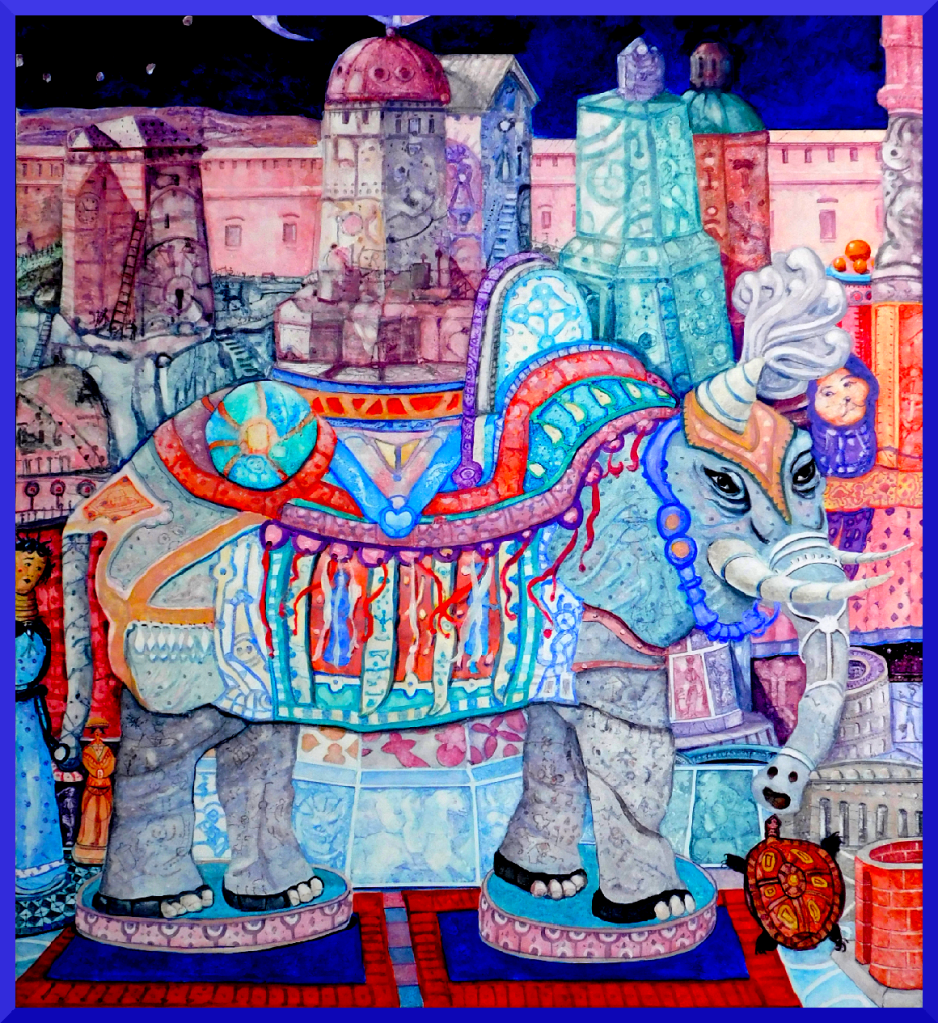
Part 5
The Elephant
There is nothing inherently dangerous about caring for an elephant, if you know what you are doing. And even if you don’t know what you are doing, everything having to do with the care and maintenance of elephants can be carried out with nearly casual indifference. But even the elephants’ obvious deep wisdom, and their basic decency and consideration of others, especially their humans, is no protection against the physics of their weight and bulk.
I have heard that a battleship, moving at the rate of one hundredth of a mile an hour, can utterly demolish any casual structure it might inadvertently come in contact with, whereas a ping pong ball traveling a hundred miles an hour will not do much damage, even to a squirrel it might happen to hit. So it is an important axiom that one should never place oneself, even for a moment, in any small space between an elephant, and an object, like a brick wall, or even a wooden wall for that matter.
Elephants like to move slowly, as if they had to make mathematical calculations and measurements before taking a step to the left or right, and if there happens to be three feet or more between yourself, and the elephant, you have nothing to fear, but if you are wedged between the wall of the elephant side, and a wall of any kind, then your are one deep elephant inhale away from death.
This dangerous situation of being wedged between an elephant and a wall hardly ever happens, except in the environment of an itinerant circus, and it nearly happened to Valeria one summer day. Even though it never actually happened, but only nearly happened, it became one of those passing and fleeting possibilities in life, of the sort that give rise to symbolic and significant dreams.
About lunch time Valeria was riding her bicycle. It was a new bicycle, new for her that is, but actually quite old. It was one of a collection of bicycles and even a few motorbikes and motorcycles that were collected by the carnival employees in the early morning just before they all departed for a new location. These various assorted means of personal conveyance were often left behind by their owners when, after the visit to the carnival ended, they forgot how they had come, and talking and laughing with friends, walked home. Late in the evening it might happen that, as they snuggled down in bed late at night, the image of their bike resting contentedly against the red and white stripes of a tent, would rise up in their mind. With a shock they would rise up in bed for a moment, and think “I left my bicycle at the circus, and I didn’t bother to lock it up. I better go and get it. But it is past midnight, and surely it will still be there in the morning.” In the morning, walking back down the road that was so crowded the day before, they encounter a vast empty field, with not a single structure of the day before. Here and there papers and trash blow about in the breeze. The ground is completely trampled, and one sees those deep holes in the ground, like wounds in the earth, where the tent spikes had been. And as for any bicycle, nothing of the sort could be seen.
It was one of these accidentally abandoned, and repurposed bicycles Valeria was riding that morning, on the day when she was almost killed by the one old elephant belonging to the carnival.
It was a three speed, but the shifter did not work and neither did the brakes. Without any brakes, she had to anticipate all her stops, and she used her foot on the ground to slow down and stop. Her shoes, which were hand-me-down sneakers, hardly lasted even a few weeks, because of being used for brakes. Except for her mother’s complaints about the destruction of her foot wear, absolutely nobody paid any attention to what Valeria might be doing from morning till night, or what dangerous situations she might get herself into, except, for some unknown reason, old Mr. Master’s who owned the circus, and was the boss of everyone, and everything. The dirt path she was riding on was a very big circle running outside the circumference of the tents and wagons, and as she passed the elephant she heard the raspy croaking sound of Edmund, the carnival barker, he was waving and calling to her. Edmund’s voice had been destroyed from years of shouting encouragement to the crowd. He was having a severe attack of rheumatism, and he began beseeching Valeria to stop her biking and help him with his numerous tasks, because, on top of his duties as a barker, he had thousands of odd jobs to do every day from morning till night. Edmund was secretly jealous of Valeria, because, being only 12, she was free to ride her bike all day long, and nobody ever asked her for anything.
Valeria stopped her bike with her left foot, and laid it down in the grass, because it had no kickstand. “Please fill up this bucket with water, and wash down Bruno’s back side won’t you dear, my own backside simply will not bend this morning.” As he said this, he made an effort to move slightly, and contorted his dried up wrinkled prune-like face in theatrical agony. Valeria, who was happy and anxious to do anything she was asked, even noxious projects like the washing down of Bruno’s backside, began to fill up a bucket with water from a nearby pump, but she was interrupted by the owner of the carnival, who we have mentioned earlier. He was way off in the distance, but could be easily recognized because he was round, dressed only in a white hat, suit and shoes, set off with a red scarf and red socks. Although he was far away in the distance he was shouting and waving to the barker, and saying, “Leave her alone Edmund, don’t be bothering her.” Valeria shouted to the man in white, “It’s ok Mr. Masters, I want to be…of use.” By way of an answer the man in white said nothing, put his hands on his hips, turned and walked away, thus indicating that, in this one instance, Valeria could do the bidding of the Barker.
Valeria washed down the elephant, front, back, and sides, and talked to him affectionately the entire time. She was saying, “Do you prefer being washed down like this with soap and hot water, or would you prefer to be fed apples?” Bruno did not answer the question. He was thinking it was a meaningless question, and was simply banter, so he remained silent in his mind. Later, thinking over what Valeria had said, he thought ‘Asking me if I prefer apples to carrots would be a meaningful question but to choose between….’ and at this point Valeria suddenly said, “Which do you prefer, apples or carrots, Bruno?” She said this because she could hear clearly in her mind, the words Bruno was thinking in his head. Neither Bruno, or for that matter Valeria thought there was anything odd about such a conversation, because, to them, it was just the usual order of things. Valeria simply assumed that everyone could hear what Bruno was thinking and she only found it odd that sometimes people seemed to be hard of hearing, or not paying attention to things going on around them.
There is nothing really odd about Valeria’s assumptions about hearing Bruno’s voice in her head. After all, doesn’t everyone automatically assume that what they see is what everyone else sees, what one hears is the same as what everyone also hears, and more to the point, doesn’t everyone assume that what they feel in their innermost being, is what everyone else feels in their innermost being as well? No matter how many times one is forced, yet again to realize that nothing could be further from the truth, yet we persist with the assumption, because how else is one to understand the world.
And so Valeria knew, without Edmund instructing her, that the next thing she was supposed to do was to lead Bruno by his tether, to his abode, which was a huge shipping container with numerous holes poked in it, and a wood ramp leading up to its entrance. Valeria had never done this before and so simply walked into the entrance with Bruno following along behind, but he stopped short suddenly when she heard the frantic shouts of the man in the white suit and red socks, who for some reason had remained in the vicinity. “Stop Valeria, not head first, never head first with the… with Bruno.”
That was the rule of elephant housing, the elephant must always be backed in, with the trainer always on the outside, never on the inside, for to go in head first created a situation too dreadful to imagine, especially with one such as Bruno, whose wall-like sides practically touched the walls of his home.
Mr. Masters came running up and, trying not to alarm or frighten Valeria, whom you must remember was only 12, he explained the physics and geometry of the elephant house. Then he went over to have a little chat with Edmund, the carnival barker, and though his voice was subdued, and he said very little, the suppressed rage in his voice led one to really wonder if there was not some other issue agitating his heart.
This encounter with Edmund and the elephant was the thing that sparked Valeria’s dream, a dream to be forever remembered, the kind of dream that becomes a marker and a guide post in life. What the dream was we shall see next month.

Part 6
Valeria’s Dream
Valeria’s dream began like so many movies begin, with a road. It was a dirt road, and she was looking down at it as it passed by, as if she was floating in the air. Then, at the bottom of this moving picture she noticed the front of a tire. It was the very front of her bicycle tire, and so she realized that she was riding her bike down a dirt road. It was very specifically her bicycle, the one with no brakes, and no kickstand, and she recognized it because the front wheel was just slightly bent, and so, for each revolution it scraped slightly against the fork.
She was looking at the tire, as it gently wove its path between the sides of the fork, but then, looking up she saw she was coasting right up the wooden ramp directly into the elephant’s house. She put both feet down together to stop, but she was on the wood ramp, so her sneaker brakes failed to stop her and she rolled straight into the space between the elephant and the steel wall of his home. It was the exact place Mr. Masters had explained she must never be, but here she was, as the saying goes, “Between an elephant and a hard place.”
She came to a stop because the handlebars got caught between the wall and the elephant’s side and she thought, “If only the doors don’t shut.” The instant she thought about the doors, they shut with a clang. Inside the container it was entirely black as night, and silent, but although there was no light, she could see clearly. It was entirely silent, but she could hear what she supposed was the clicking of raindrops on the roof. She remembered that the container had big holes in the walls through which she might be able to see out, and sure enough, the holes in the walls appeared, and standing on her toes she was able to look out.
Then there was an interlude, as often happens in vivid dreams, and she became a spectator at a parade. She was looking down on the parade, as thought from a high balcony. First came cheerleaders with battoons, and then a marching band. Then came tanks and cannons pulled by horses, and then ambulances with their sirens on. After the ambulances came wounded men being pushed along on gurneys, and doctors sawing their arms and legs off. With a scream she woke up.
She didn’t actually scream, she was trying to scream, you could call it a closed mouth scream. Valeria was extremely happy to be able to say these words to herself, “It was only a dream.” But she was unable to divest herself of an uncomfortable feeling of dread, and so, lying there in her bed in the middle of the night, she said a prayer. It was her own special prayer that she had made up herself, I can’t tell you what it was, because it was a very private thing. I only know that it involved lying on her back, arranging herself in the shape of a five pointed star, two points for her feet, and two points for her hands, and the top point for her head, and it ended with the words, “God likes me.”
Valerial went right back to sleep before she was even able to press her face firmly down into her pillow, and so found herself back in the elephant’s house, and in the same situation, because it was a determined dream, and it did not like being interrupted.
Like before, it was raining, and the rain drumming on the metal roof sounded like thunder. There were holes in the roof, and water started to drip on Valeria’s head, the water ran down her face and got into her eyes. Looking outside through one of the air holes, she saw that it was raining so hard that she could not even see across the road.
Then rain began to pour down inside just as hard, even harder than outside. She looked down and saw that the water was up to her knees. “Only my knees,” she thought, but then, the evil intentioned dream made her see that it was now up to her chest, and then, up to her neck. She stood up onto the seat of her bicycle and from there she scrambled up onto Bruno’s back, and then up to the top of his head.
Finally the end came for little twelve year old Valeria, as there was only a few inches left between her mouth and the rusty ceiling of the container. Valeria, in the last seconds of her life, (in the dream that is,) began to say the Lord’s Prayer. The Lord’s prayer was, in this instance, a better choice than her homemade prayer, because the homemade prayer was for going to sleep, and that was not what was needed. She only got as far as the words, “Which art in,” and the walls of the container burst apart with a tremendous roaring sound.
Some people say that the container split apart because of the prayer, and others say it was because a steel packing container can’t stand the weight of so many tons of water, and that it was a miracle that it had held together for such a long time. Others claim that Bruno realized what was happening, and simply took a deep breath and the expansion of his ribcage blew the container apart, but it was a dream so how is one to know?
Valeria woke from this second dream in the early morning, She did not need a clock to tell her that it was about five in the morning, because the small window next to her bed had that subtle silver glow windows have, just before dawn. Just before the sun comes up is the best and easiest time to fall back to sleep, a sleep often unclouded and untroubled by care. Valeria felt that she had escaped from death at the last instant, even though it was only a dream. She felt a tender love for her friend, the elephant who had saved her, and made up her mind to go and have a chat with him later that day.
But the strange dream was not yet done with Valeria, and as soon as sleep had overtaken her she found herself standing on the dirt road next to her bicycle. It was still raining torrentially, and the dirt road was a quagmire of mud. She was only able to move her bike by pushing it with all her might, because the wheels were stuck in the mud, and the tires made a sucking sound as they moved. Then, after a considerable distance, she found that the road was now dry and she got up on the seat and began to peddle. With great effort, standing upright, and using all of her slight weight first on the left side and then on the right, she was able to move along the road just fast enough to keep from falling over. As the mud disappeared from the tires and the spokes she began to go a little faster, and so was finally able to sit herself down on the seat, and sometimes ever coast a distance with no effort.
The sun came out and the dirt road became completely dry and dusty. She felt a wind pushing on her back and the road began an accent, gradual at first, and then steeper and steeper. Now Valeria was going uphill very rapidly and she was pedaling as fast as she was able, but it was not at all necessary, because the bike was rushing along as if propelled by an irresistible force. She was inspired, in her heart and soul, to extend both her arms and legs straight out. LIke when praying to fall asleep she assumed the shape of a star, and in that pose she arrived at the very top of the hill, and at its crest she flew up into the air.
She was utterly shocked to find that she was flying on her bicycle, and was overcome with fear and exhilaration, but caution ruled the day, and she began to reason along these lines. “It is wonderful to be flying on my bicycle, and if I crash or fall off I most likely will not be hurt, but what if the bike and I go high up, what if I go up into the sky among the clouds?”
And then the bicycle with her on it flew right up into the sky, so that the landscape took on the appearance of a multicolored quilt thrown out over the land way down below, with houses the size of match boxes, and streets and rivers like silver threads. She was surrounded by brilliant sunlight. It seemed so natural to be flying in the sky that she almost lost her fear and succumbed to a feeling of bliss. She said the herself, “This is the most sublime moment of my life, nothing could be more wonderful, but as if to simply contradict her, the dream caused her to ascend still higher so that now the scattered clouds were far below her, and the air and the sky were no longer blue but a suffused combination of silver and gold.
Valeria said not a thing to herself in her mind, because where she was, and what she was experiencing was a thing beyond words and even beyond feeling. Finally she came to herself, placed her feet on the pedals and with her hands firmly on the hand grips, she turned her attention to the question, ‘How will I ever get down from here?’
How she managed to extricate herself from such a dangerous situation we shall see next month. It is the elephant who will save her, because he was having almost the exact same dream.
Richard Britell, February 2024
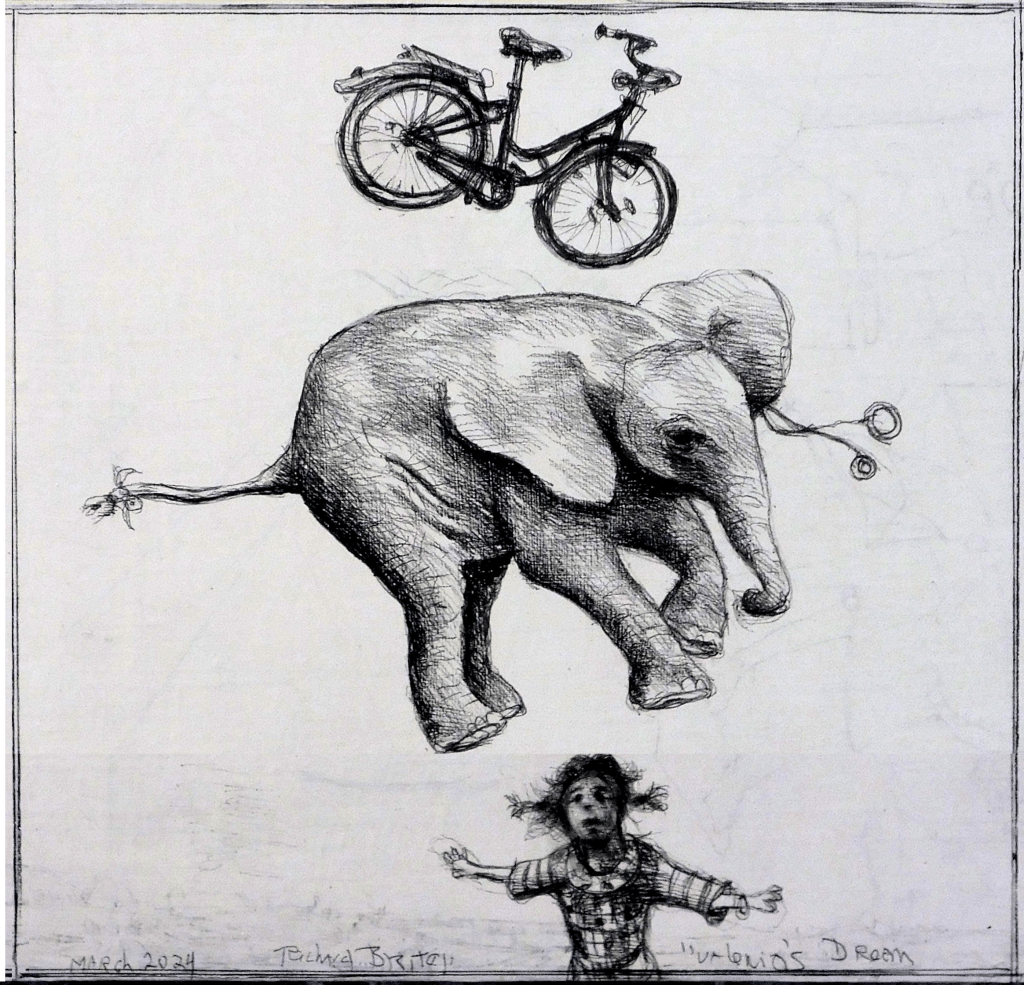
Part 7
The Conclusion of Valeria’s Dream
The last we heard of Valeria, she was in the midst of a profound dream. She had escaped from the near death experience of being trapped in the elephant’s house as it was flooding, and then found she was riding her bicycle around in the air. All of it was part of a long and realistic dream she was having while she lay calmly sleeping in her bed in the early morning.
“It is wonderful to be flying on my bicycle up here in the air, and if I crash or fall off I most likely will not be hurt, but what if the bike and I go high up, what if I go …up into the sky among the clouds?” she was thinking to herself. As soon as she considered it, she flew right up into the sky, so that the landscape took on the appearance of a multicolored quilt thrown out over the land down below, with houses the size of match boxes, and streets and rivers like silver threads. She was surrounded by brilliant sunlight.
It seemed so natural to be flying in the sky that she almost lost her fear and succumbed to a feeling of bliss. She said to herself, “This is the most sublime moment of my life, nothing could be more wonderful. But as if to simply contradict her, the dream caused her to ascend still higher so that the scattered clouds were far below, and the air and the sky were no longer blue but a suffused combination of silver and gold.
In the throes of such a sublime experience,Valeria said not a thing to herself in her mind, because where she was, and what she was experiencing was beyond words and somehow even beyond feeling. Finally she came to herself, placed her hands firmly on the hand grips, and turned her attention to the question, ‘how will I ever get down from here?’
Valeria’s difficulty was quite simple, she did not weigh very much, and even if you consider the weight of the bicycle, it was not enough to counter the effect of the almost total absence of gravity in her dream. In dreams, people often float around in the air, so it is obvious that the pull of gravity is very much reduced in cerebral realities. I have not asked any scientists about gravity in cerebral realities, but it is unnecessary, as it’s obvious.
Fortunately for Valeria, her friend the elephant was having the very same dream she was having, and she encountered him in the clouds, high above the earth. He was riding a bicycle, it was also one of those bicycles the carnival workers had collected over the years.
Because of his great weight, he was very gradually descending, even as she was continuing to ascend. As they passed each other she jumped from her bicycle onto his back. Fortunately, she was able to grab hold of his tether, and slowly the two of them descended to earth, landing in a gigantic pile of sand in a quarry. The quarry and its piles of sand and gravel was a sight she had observed a few days before, and so the image was standing by, ready in the back of her mind, and was pressed into action at the very last instant.
Why the sand pile was in her mind that night is an interesting story in and of itself. Here is how it came about. A few days previously all the carnival employees were in an old school bus that, from time immemorial, had been used to transport everybody to their next location. This old bus was driven by a character named Thomas. The bus was his only responsibility, because after each trip the antique contraption had to undergo various repairs. Thomas was one of those odd and exaggerated personalities that carnivals like to produce in abundance, and like many others he was extremely fond of 12 year old Valeria.
Here is the odd way he expressed his affection for the child. When she would enter his bus he would turn to her and shout at her as loud as he was able, “GOOD MORNING VALERIA, HOW ARE YOU TODAY.” Valeria loved this odd greeting which she would be expecting, and she would reply by screaming out “I AM FINE THOMAS, AND HOW ARE YOU!”
There is something profoundly exhilarating about screaming at the top of your lungs at someone, for no reason at all. Just try it sometime. Scream, “HOW ARE YOU TODAY,” to some unexpecting stranger. It is an activity that will affect your mood for the rest of the day.
This screamed greeting that Thomas and Valeria engaged in, belonged entirely to the two of them, and if anyone else tried to enter into their screamed conversations, they were ignored, and in this way, Thomas expressed his love for Valeria, and to anyone else he presented only his morose and preoccupied self.
Valeria would always take the seat right behind the bus driver, and sitting there hunched forward, she would engage Thomas in long rambling conversations. She would ask endless questions and he would answer everything, sometimes seriously and at other times making up outlandish scientific sounding explanations, invented only to get Valeria to laugh out loud. When she would laugh, he would turn and look at her with the utmost pleasure, as if such childhood laughter was the best and only purpose of human existence.
Everyone on the bus knew everyone else on the bus, so trips were filled with conversations and arguments, songs were sung, both in unison and in part-harmony. Philosophical and political arguments were entered into. They argued about various things. They argued about if the earth was really round, or if it was an optical illusion.
Sometimes the arguments were of a theological nature. Theological disputes would immediately divide the passengers into three groups; the deeply religious, the agnostics, and the atheists. The passengers were not educated folk, so those terms were not used, but those three attitudes, expressed as yes, no and possibly, have existed from the beginning of time. There were those who believed in God because of their lifelong suffering, and there was an equal and opposite group that did not believe because of their lifelong suffering. There were those in the middle, who could not make up their minds about God, or anything else. This middle group, who prided themselves on their intellectual superiority, were perhaps the least interesting.
One day, in the middle of one of these religious arguments Thomas, the bus driver made this comment, “Everyone of you believe in God whether you want to or not, regardless of what you might say. Why, if I took any one of you atheists up in an airplane, opened the door and threw you out, you would be praying to the Lord God Jehovah all the way down to the ground.”
Then, unexpectedly, the little old lady named Margaret, who was eighty four years old, (she always said) and who never said anything at all, one way or another, and who spent her time darning socks said, more to herself that to anyone, “Well, if you pray hard enough, God will be sure to put a nice pile of sand under you for you to land in, would he not?”
As usually happens when someone makes a remark like that, the passengers who heard it immediately began arguing about it. Some said things like, “Sand won’t save you, and neither will water if you fall from a great height,” and other disparaging and argumentative remarks, especially from the atheists. The true believers remained sullen and silent, and the agnostics wondered if the question could be put to the test with a pig or a goat.
But just as Margaret finished speaking, the bus rounded a corner and out of the windows a stone and sand quarry came into view and the passengers observed a gigantic pile of sand. The accidental convergence of Margaret’s remark, and the pile of sand might have passed unnoticed, but Thomas, seeing it, slammed down the clutch and the brake at once, (as his father had taught him as a young boy saying, (“In any emergency when you are driving, slam both the brake and the clutch at once!”)
The old bus lurched to a stop. The passengers , most of whom did not even hear what the old woman had said, just assumed it was another breakdown, but the significance of the moment was not lost on Valeria. Valeria felt it was a solemn and important moment, and she said to herself, “This sand pile is some sort of omen and of great significance, and I shall remember it for the rest of my life.”
Some historians of the life of Valeria dispute this, saying that the word ‘omen,’ would not be in a 12 year olds vocabulary, but others disagree with that observation, saying that it can be found in one of her journals written years later. But if it was a journal written years later, the word ‘omen,’ might have slipped into her conversation.
Be that as it may, that was how the sand pile appeared in the dream, and a good thing too, because even though there was very little gravity in the dream, there was enough so that the elephant was going about 14 miles an hour when they landed. If they had landed on pavement, or even in a field, it would have been very injurious. There was one last important detail in this dream of hers. In the pile of sand there was a gigantic black Steinway piano, at an odd angle, and with the lid propped up. Its white keys were gleaming in the sun, and looked like the teeth of a gigantic black cat smiling at her.
In the future it will be necessary to explain and interpret this strange dream, most of it has been deciphered at the present time, but the explanation of the grand piano remains a complete mystery even to this day.
Richard Britell, March 2024

Part 8
The Itinerant Duck
Perhaps you have forgotten all about Otis, the dog belonging to the circus clown, who decided to run away after his traumatic experience in the dog fighting ring. It was not long after Valeria’s prophetic dream that he showed up early one morning to say goodbye. He was extremely troubled in his mind, and for an obvious reason. He loved Valeria very much, as a matter of fact, he loved her more than he realized, and the entire meeting was to say goodbye to her forever.
He had made up his mind to run away, but the prospect of never seeing Valeria again was impossible for him to think about. This conversation between the dog and the girl was conducted exactly in the same way as the conversations with Bruno the Elephant, and Valeria. People who overheard her various conversations with animals thought nothing of it, just like when a child has a long serious conversation with one of their dolls.
Otis, sitting down in front of Valeria said the following. “I have decided to run away forever Valeria, we will never see each other again.” He said this bluntly, and unfeelingly. He had decided the previous day that he would fortify his heart with an affectation of indifference, knowing full well that if he allowed himself to feel anything at all he would lose his resolve.
“You know Otis,” she replied, “I am sometimes clairvoyant, and there are times I can see the future. Would you like me to tell you about your future, so as to get an idea of what is in store for you?”
Then, not waiting for him to reply, she took hold of both his ears in exactly the same way that you would take hold of a very large two handled tea cup, and closing her eyes said the following.
“You are not who you think you are, and I am not who you think me to be. You and I will never part, even if you flee from me, beyond the sea.”
But before I can tell you what other things Valeria said to Otis, I must tell you why that dog and that girl were so profoundly attached to each other, especially when you consider that Otis was not even Valeria’s dog in the first place.
Their relationship began seven years before this particular day we are describing, and they weren’t friends to begin with. Actually, when Valeria was five years old, she developed a phobia, a paranoia, specifically, a fear of dogs.
Valeria was not thought to be a precocious child. Actually, she was so precocious that indeed, she often appeared to be obtuse, so absorbed in herself and her own thoughts and perceptions that the adults in her world paid very little attention to her. One day Thomas the bus driver was entertaining a group of carnival workers with an account of ancient history. For some reason Thomas liked to study ancient history and he was narrating to his listeners the story of how Romulus and Remus had founded Rome. It was the absurdity of the twins being raised by wolves he was expounded on to his bored listeners, and he exclaimed. “How the devil did those children fall into the hands of a bunch of wolves in the first place? What happened, do you suppose? Where they carried off from their cradles one at a time or the two together?” Getting no answer to his question, which was important to him but to no one else, he changed the subject to the Punic Wars. He began to consider the question of Elephants. How could elephants have ever crossed the Alps, he wanted to know, but it was not a question that agitated anyone else in his company.
It is odd how a pointless conversation, and the irrelevant observations of a half educated bus driver, could on the one hand be entirely forgotten two minutes after they were uttered, and on the other hand, overheard by a child, be remembered for a lifetime. From this conversation Valeria drew one conclusion, children might be abducted by dogs. Otis, who also happened to overhear the conversation, concluded that wolves might abduct a child. Bruno the Elephant, who was also listening, realized that humans have a very limited understanding of the true strength, tenacity and intelligence of elephants, himself in particular.
It was almost immediately after the bus driver’s dissertation on the Romans that Valeria developed a terror of dogs, and at the very same time, Otis began to fear that children might be carried off by wolves. He could not imagine in his wildest dreams that any dogs would ever do such a thing, but wolves, they were another matter.
In the shelter of a carnival, a small universe unto itself, Valeria was put out to play in the morning, and usually called in for lunch and dinner. At five years old, she would sometimes show up where the Elephant was being fed, the acrobats practicing, or in the kitchen where dinner was being scraped together. Like a cat that belongs to everyone and throws herself down in front of any passing stranger, Valeria belonged to everyone.
But after the day of Thomas’ history lesson, Valeria would only with great reluctance leave the patch of grass outside her mother’s trailer, and fled inside in silent terror if Otis appeared anywhere in the distance.
Otis did not, at first, understand that it was he himself that was terrifying the child, but employing his doglike reasoning, he assumed there must be some danger lurking in her vicinity. Gradually he developed the habit of taking his occasional naps in the vicinity of the child, but even when he was resting contentedly a great distance away, she would notice him and run inside.
Finally he realized that his very existence was a source of torment and fear to the child. This was a terrible blow to his ego, to his very idea of himself. It was a crisis of the idea of the self, when a being is forced, against their will, to realize that they are not the being they thought themselves to be but some offensive opposite.
At the same time he was feeling rejected by the five year old, he was developing a paternal affection for her. This is how he thought and felt. From a distance he watched as she learned, after many tries, to do a somersault. He watched from behind a tree as the training wheels were removed from her little bike. After seeing these typical things he would later see the image of her in his mind and think ‘She rides a bike now, she does a summersalt now.’ Then the inevitable happened, he assigned to himself the role of her protector. So Valeria acquired a champion, a knight in shining armor, a being she was terrified of in her innermost being.
So Otis was always somewhere in the distance, but Valeria did not become accustomed to his presence. She always had one eye out for him, and if he even changed his position she would stop what she was doing and go inside. Things might have gone on forever in this way except for an exceptionally intelligent, itinerant Duck who, about that time, began to accompany the carnival in its travels. The Duck just showed up one day, and made the acquaintance of everyone at the carnival. He soon became good friends with Otis, and often took a nap with him in the afternoon. The dog however only pretended to be asleep, he would have one eye half open all the time, and one ear would twitch around this way and that, at the slightest sound.
He was keeping an eye on his charge who would be playing in the yard in front of her trailer. These are the things she would be doing at that time of day. She liked to make houses for ants, four sticks in a square was an ant house. The ants had small cars they liked to drive around in, and a car was made of two twigs side by side, and four pebbles for the wheels. There was a grocery store in the yard that consisted of a half of an egg carton next to an empty cylindrical container of oatmeal. When she was tired of playing with her ant family, she would climb up in the remaining branches of an almost entirely destroyed sumac tree.
So things might have gone on unchanged except for the Duck who began to notice the dog’s odd nervous behavior, and being especially observant he soon figured out the entire situation of the dog and the child. He felt it was a difficult problem because Otis, although he would never hurt anyone, was a very frightening dog to begin with. He was not frightening in the way that ugly dogs scare people, on the contrary, he was scary because of his rather beautiful wolflike aspect, and also he was a monochrome dog, specifically he was entirely black. The Duck was aware of a certain rule of dog aesthetics; the rule being that the polychrome dog is always preferred to the monochrome dog. He had been wont to say, “Consider the collie with its beautiful color combinations of white, golden brown and gold. Why even a collie with rabies is considered adorable, not to mention the cocker spaniel, with its dark brown coloring, and the white patches above the eyes. So the most obnoxious Cocker is instantly coddled and adored. But a big monochrome brute is often a terror to behold.”
The duck thought to himself that he might try to explain to the dog Herman Melville’s theory of how the white whale was so terrifying because he was pure white, and so, pure white being the most terrifying color…. But he thought better of it, knowing as he did that literary references are usually lost on even the most perceptive of dogs.
The Duck set himself the task of solving the dog’s problem. His truly brilliant, almost divine solution we will discuss next month.
Richard Britell, April, 2024

Part 9
The Raggedy Ann Doll and The Invisible Elephant
The Itinerant Duck had set his mind to reconciling Otis the dog to five year old Valeria and an obvious solution instantly suggested itself. The Duck had often seen Otis and the rooster perform their fights before carnival audiences. How, he wondered, could even a small child be afraid of a dog who is terrified of a rooster.
So the Duck, taking the place of the rooster, staged a combat in full view of Valeria, but although she watched the fight from a distance, she still ran inside as soon as the fighting ended. She even, oddly enough, began to be afraid of the Duck himself. Why the child became afraid of the Duck I can’t say for sure, but I think this detail of her childhood is incorrect. I think she became suspicious of the behavior of the Duck, seeing in his actions, attempts to deceive her.
But the Duck did not give up. Shortly after the failure of his combat with Otis, he happened to see in the distance, a farmer leading an injured horse by a rope, across a field. He noticed in himself a concern for the lame horse, and he thought, ‘Why yes, obviously, pity for an injured animal is so automatic, so predictable. If Otis can be convinced to simply hobble around on three legs, and be induced to whimper and complain, that would surely work.’
Otis reluctantly agreed to the idea, and walked back and forth in the distance tilted slightly to the side, and not only favoring and holding up a paw, but even inserting long pauses in between his steps. The Duck, watching him, was filled with sorrow, even though he knew it was just an act, so effective is the power of theater to deceive.
But it was a failure, it had no effect on Valeria, who, though she watched from a distance, still walked backward till her heels bumped the stair of the trailer, and then, as before, went inside and watched Otis from the window.
Now the Duck felt himself to be a total failure. It was a Wednesday, the slowest day of the week for the carnival. It was a silent, and overcast day, and he took himself off to the circus tent, and sat down alone in the bleachers. He sat there a long time lost in thought, but there was a break in the clouds and sunlight cast a beam of light through the opening at the top of the tent, and lit up a patch of the bleachers just a few feet from where he was sitting. There in the sunlight he beheld the perfect solution to his problem, a Raggedy Ann doll, left there by some child at the end of the carnival performance.
I think it is very easy to perceive a form of divine intervention in the illumination of the doll. Many scholars of Valeria’s life have even gone so far as to state that it was obvious that God was pointing to the doll with a ray of light, exactly like a finger. Those writers who refer to Valeria as Saint Valeria, are especially inclined to interpret almost everything in her life from that point of view, and I will try not offer any opinion about it.
But though I might try to keep silent on this important question, I feel compelled to say a few words about it, against my better judgment. First of all I think it is both stupid and absurd that God in his infinite wisdom, and with so many things to be concerned about in the present, and in the future world we have to live out our lives in, would take his precious time to concern himself with some rag doll left at the circus by some child. And, to be sarcastic about it, as He was rescuing the doll, perhaps at that very moment two hundred people might be plunging to their death because of a railroad accident somewhere in India. All those people, screaming in terror as their railroad car fills up with the waters of the Ganges, (holy water as I am sure you know,) will be ignored because of the Raggedy Ann doll, which must be saved from being thrown into a dumpster. No cosmology, no theology, can accept the actions of a Deity that places a rag doll above the fates of those poor people, innocent of any wrongdoing, condemned to die for no reason.
And the doll is not even animate, it is just a bundle of rags stuffed with straw, put together to resemble a child. So you see, I think divine intervention in human affairs, from the saving of dolls, to the parting of the Red Sea, and even to the raising of Lazarus, is an idiotic idea. And yet I, as the writer of this chronicle, believe it in my heart and soul, and I believe some rag doll is more important, sometimes than the entire population of some coastal city about to be inundated by a tidal wave. I am not going to try to prove it to you. I would not attempt to prove such an absurdity even to myself. But I firmly believe that when I look back on it one thousand years from now, it will be just as obvious as four cupcakes, and equally obvious to all the people in the train who had to drown while Raggedy Ann was rescued. Also, I think the doll herself would understand the truth of it. Because as we all have so often been told, the Lord works in Insidious ways.
Please forgive me for that pointless interruption. The next day Otis appeared in the distance with the doll hanging from his jaws. Valeria, seeing him in the distance beheld the terrifying apparition of the dog in the act of abducting a child. She was so terrified at that moment that she was unable to move or even to cry out. Otis, following the Duck’s instructions, headed slowly and directly for the child. The Duck expected that Valeria would run inside, but she was so hypnotized she couldn’t even move. Otis got about ten feet from her and dropped the doll on the ground, and then took a few steps back and sat down. A few moments later he turned suddenly and ran off into the distance.
As soon as the dog was out of sight, Valeria picked up the doll and went inside. The doll had three punctures, one in her cheek, and two in her arm. Valeria knew exactly what to do, she dabbed mercurochrome on the wounds, and then bandaged her new child, and put her to bed, and while the doll slept she sat by it.
The next day Valeria’s life was changed markedly, she had a child to take care of, but more importantly, a new companion, Otis, who for many years to come would often be seen by her side.
But now Valeria was fourteen, and she had been expecting the visit from Otis for a long time. Although they had never talked about his leaving, and he had even avoided thinking about it in her presence, still she had divined it because of his thoughtful and distracted behavior, and besides, the Tarot cards left no doubt in her mind,
Previously she told him that he was not who he thought he was, and now she elaborated. “You are not a dog Otis, the truth is you are actually a wolf, a wolf in dog’s clothing. It has always been your destiny to run wild. So you are not running away from anything, you are running to your true self. And we will not even miss each other that much really.” At this point Valeria, who you recall was only fourteen, wanted to say something profound and significant to Otis. For a brief moment she thought about how wolves howl at the moon; about how she sometimes would look with wonder at the moon at night. She pictured a moment some time in the future when, at the same instant they would both be looking at the moon, it would be the very same moon and it would be the same instant, the same exact instant. And since it was the same moon, and the same instant, then they would be… as if…they were looking at each other, and so, in this way they could never be parted. But she was unable to express these vague thoughts and impressions. She tried to speak, but couldn’t.
Otis saw all of her vision in his own mind’s eye, and understood what she wanted to say. He looked at her with that look dogs always have, the look of excited expectation, as though something good and wonderful was just about to happen, and then he turned and ran off. Valeria watched him till he disappeared into the distance, and Raggedy Ann waved from the window.
After Otis left she went into her room, threw herself on her bed and cried bitterly for a long time. She had not wanted Otis to see how she really felt, bereft of his protection and friendship, feeling that it would interfere with his destiny.
When she was done with crying she went to see her elephant friend, to see if he might be able to cheer her up, and she was not disappointed. The elephant already knew that Otis was gone, and said to Valeria. “So your protector has fled into the woods. He was a fearful fellow, and just imagine what would have happened to anyone looking to abduct you. But don’t worry my child, as I have my eye on you. I also will protect you. And though dogs can tear a person to bits with those fangs they have, we elephants work in a different way. We crush our enemies to death with a simple inadvertent gesture, as we continue to munch on grass.”
“But Elephant, you can’t always be with me to protect me.”
“Child, did you have a dream of flying? And was there an elephant in that dream of yours? That was your elephant, your invisible elephant, which I represent. He will go wherever you go, and even in your dreams he will inadvertently, and as if accidentally kill all your enemies.”
“But why,” Valeria asked, “ am I so important that I have to have a special elephant to protect me?”
“Yes, you are special, but don’t ask me why, “ he said, and for an instant he had a notion to talk of Joan of Arc, but he bit his tongue and said nothing more.
Richard Britell, May 2024
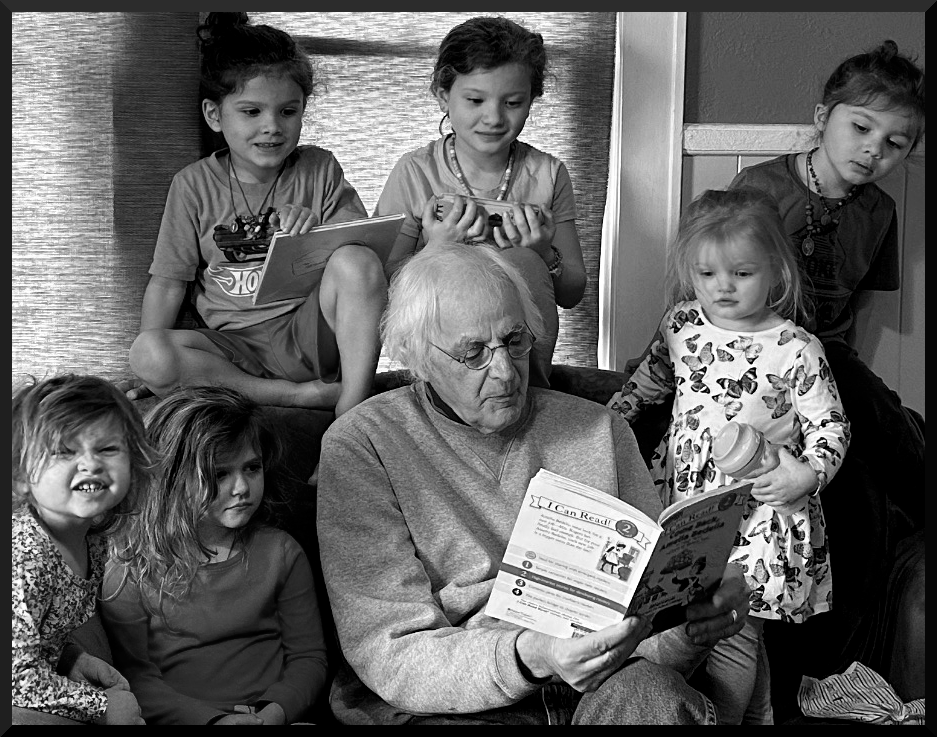
“The Lost Chicken”
From the series
“Stories For Children”
There was a little girl whose name was Ella and she never said a single word. Her brothers and her sisters, of whom there were six, would poke her on her shoulder, and tap her on the top of her head, and say various things to her but she remained obstinately silent. The reason that she never said anything to anybody was because she was only two years old, and so had not learned to talk yet. She did sometimes say Ma-Ma, or Pa-Pa, but those words really didn’t count because mice, cats, and even a dog would say those things if only they were able.
But one day when all of the children were in the yard playing on the swing set, little Ella said her first word, she said the word,”Chicken.” She said the word chicken three times, and then she waved her arms all around and kicked her feet happily. All her brothers and sisters, of which there were six, as I said before in the previous paragraph, all jumped up at once and began screaming, and ran to the house shouting Mommy Mommy, Ella just said “Chicken.”
“She said it three times,” said Charles, who was four at the time, and had just recently learned how to count to three. Their Mother immediately came out into the yard, wiping her hands on a towel. She had been mixing up pancake batter on the stove, because it was nearly lunch time. She stood over Ella with her hands on her hips looking at her daughter expectantly, and the child, after a few moment’s hesitation pointed at the ground, and said “Chicken,” and again, as before she said it three times, and again, as before she waved her arms and kicked her feet happily.
Now it just so happened that there were several chickens in the yard at the time, and they were running about and clucking as they always do, but when Ella pointed to the ground there was no chicken to be seen. On the ground where she pointed there happened to be a closepin, several stones, and a bottle cap, but she did not say any of those words. Indeed, she did manage to say “Stones,” just a few days later, but it would be another several months before the child would manage to say anything like “Clothespin,” or “Bottle cap.”
Just then a red truck pulled into the driveway and a man wearing overalls, and with a beard got out. This was the father of the children, who had just come home for lunch, which was going to be pancakes. Seeing that the children were gathered around the swing set, he came up to them and they all explained to him how Ella had said the word “Chicken,” but they all explained it to him at once, each shouting louder and louder so that he was unable to understand a single word. Finally he had them all quiet down and he appointed one of them to give an explanation of what was going on. This task was given, to Ella’s older sister, Francisca, who was seven at the time, and was often called upon to explain things, clean up spills, put dishes away, and also to translate into English the things that Charles said, which were often very complicated, but sounded like Chinese, and could be readily understood by Francisca.
Francisca said, “Elle said a word, she said, “Chicken”, three times.” Charles wanted to say the thing about the three times, but he was quiet. “Did she say “Chicken,” or “Chickens,” the father asked, but nobody understood the question. They all went in the house and sat down at the table, and when the pancakes were ready everybody got three and they ate them all up with syrup. While they were eating Ella kept saying “Chicken,” over again, and also hitting the table with her hand which was sticky with the syrup that had spilled on the table. The father, whose name was Alaric, finished the last piece of his pancake, and then he said, “I think you better go out and count the chickens.” When he said this all the children became quiet, especially John, who was six, one year younger than Francisca. He became quite serious because his job was ‘Keeper of the Chickens.’ “Why do we need to count them?” he asked, but the father did not reply. They went out to the yard. The chickens were running all over the place, and up and down the wooden ramp that went up into the chicken coop.
Now it is extremely difficult to count chickens because they are so disobedient and refuse to stay still even for a short time. They will listen to directions but only because they want to do the opposite of the thing you tell them to do. It is no problem at all to count the chickens if there are just three of them. If there are three, they can be running all over the place, but even so, you just look at them all at once and you can see that there are three, only three. For this reason three is known as an ‘obvious number.’ Four is also quite obvious and sometimes five can be obvious, but it is with six that the problems start. If six chickens are running about in a yard and you count them, you may get seven by accident, or sometimes five, so the numbers after six are all called ‘not obvious.’
Twelve is considered an impossible number, and if you have to count twelve chickens you could easily get to twenty, and be none the wiser.
It is some help to try to herd the birds into little groups of four. If the children could have only managed to make the birds stay in four groups of three, or three groups of four they would have got to the number twelve, but it wouldn’t work, because even the eldest child, Francisca, did not know how to multiply yet.
Finally in desperation, they got all the chickens to run into the chicken coop all at once, and then they let them come out one at a time. There were eleven, and so, one chicken was missing, because there was supposed to be twelve
All the children became alarmed about the missing chicken, but since she most likely had just flown over the fence they set to work to search all over for her. They lived on a farm in the country and all around were open fields, a little lake, and far in the distance could be seen mountains and forests. They searched and searched all afternoon and into the evening, but could not find her, or even any sign of her.
Foxes lived in the woods beyond the lake, and sometimes their heads could be seen in the tall grass between the lake and the mountains. Foxes had been known to run off with chickens, and it happened a long time ago, the one to the neighbor’s birds was thought to have been taken away by them. In front of the lake, and behind the house there was now a flock of geese, and the geese alway kept an eye out for any foxes. If they saw a fox in the tall grass, they would fly up into the air, and then fly down upon the foxes and make them run away, back up into the mountain. Because of the geese, they were not worried about the missing chicken, but still, even the next day she could not be found.
In the afternoon of the second day the postman stopped to deliver the mail, and, just like every other day, he called to the children in the backyard, and asked them what they were doing. “Looking for our lost chicken,” Fanceisca said. “Well, perhaps it has been….” but the postman suddenly stopped speaking, frowned, and said nothing more. Later the trash man stopped to pick up the trash, and he, like the postman talked to the children in the yard, amd when he heard about the missing bird he started to say, “Well, perhaps the bird has been…” but he, like the postman stopped speaking, dumped the trash cans and drove away, not forgetting to blow the horn.
That night, when the children were sound asleep their father Aleric, and their mother Maria were drinking tea at the kitchen table and they began to talk about the missing bird. Aleric said they might have to tell the children that it was possible the bird would never be seen again, and the Mother said that was probably the case. While they were talking Francesca was sitting on the top most stair with her head in her hands, and when she heard the chairs scrape on the kitchen floor, she ran to her bed, pulled up the blanket, and pretended to be asleep. In the morning she said to her Pa-Pa, “What does probably, mean,” and her Pa-Pa said, “Were you listening on the stairs?”
The next morning it was the third day after the chicken had disappeared, and John, who was six you will remember, and was the ‘Keeper of the Chickens,’ woke up early. It had been raining, and his window was all wet and everything outside looked blurry. Out of his window he could see that the chickens were all out in the yard, and he noticed that there were six of them in a row on one side of the yard, and also six on the other side of the yard. He thought to himself, “Six on one side, and six on the other, just like you see eggs in a carton, because six on one side and six on the other is a dozen, and a dozen is twelve. Then he jumped out of bed and screamed out, “The lost chicken is back.”
Indeed, the lost chicked was back, and although they all questioned her for a long time she remained obstinately silent. She did cluck a few times, but it was not in answer to any questions. But the chicken that had been lost was now somehow different. She walked with a slight limp. She would take two or three steps, and look to the right and cluck, then she would take a few more steps and look to the left and cluck. All the chickens did the same all the time, and yet somehow the one who had been lost did it differently. What had become of her while she was gone, and what adventures she had we shall find out, eventually.
Richard Britell, June 2024
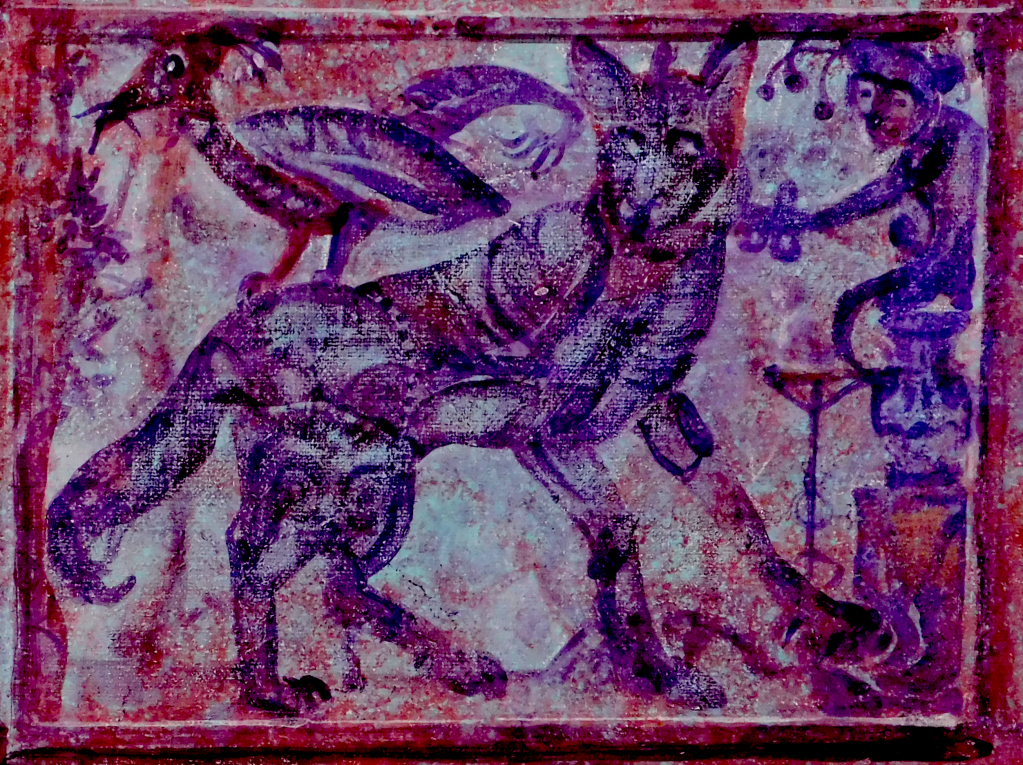
“Fox Grapes”
From the series
“Stories For Children”
Rowena, the children’s twelfth chicken, was lost for three days. She became lost because she flew over the fence in the chicken yard by accident. She decided to go for a walk. She had never been on the other side of the fence before, and had often wondered about the things that could be seen in the distance.
She could see the lake, but did not know what a lake was. She could see that there were ducks standing around the lake, but she did not know what ducks were, to say nothing of the mountains in the distance.
She walked down a path towards the lake, stopping every few steps to look at things she had never seen before. She looked at an acorn and wondered what it was and how it came to be sitting in the path. She saw ants and a spider, and then stopped to examine some grapes that were hanging in clusters from a tree branch.
The grapes she was looking at were very small, and are called “Fox grapes,” and at that time of year, which was September, they were perfectly ripe. People do not eat fox grapes, but foxes like them, and so it was not surprising that Rowena came across a fox under the tree branch, who had been eating grapes all morning long.
The fox, whose name was Samson, was wearing a fur coat and pants with white edging, and a pair of white boots, also made of fur, at least that is what Rowena thought, having never seen a fox before.
At that moment Rowena was in great danger, and if it had been a different time of day, or a different month in the year, she would have never been able to complete her walk, and never would have come home again, except for one thing, and that one thing was; the fox had a terrible stomach ache.
The fox, seeing the chicken, jumped up from where he was sitting under the fox grape vines and introduced himself, saying, “Good day to you chicken, what might you be doing outside of your chicken coop?” And Rowena replied, “I flew out quite by accident, and now I am going for a walk.”
“I have been here all morning eating these fox grapes, and now I am quite full. Do you eat these grapes?” The fox inquired.
“No,” Rowena replied, “at least I’ve never tried; I eat seeds and corn, put down on the ground for me by the farmer’s children. Do you eat other things besides the fox grapes?”
“We foxes eat mice, rats and squirrels, and chipmunks when these fox grapes are not in season.” The fox said everything very slowly, and with long pauses and deep breaths between his words, because his stomach hurt him so badly. He was leaning there against a tree with his feet crossed, and his left paw upon his stomach. With his right hand he stroked his forehead with a little rag.
“You should be very pleased with us foxes, Rowena,” the fox explained, “Because,” and then after a long pause and some deep breaths, he continued, “we eat all the little animals that are always stealing your food, and that you have to be constantly chasing away.”
It was true what the fox said, and Rowena also had the job of chasing away crows, and the crows, unlike the squirrels, refused to be chased away, and would sometimes even turn around and fight with the chickens over some little morsel lying on the ground. Although it was Rowena’s job to chase away the crows, she did not really mind them so much and had been heard to say, more than once, ‘Oh leave the crows alone, they probably think they are just hens like us, and don’t understand why we chase them away.’
Just then one of those crows landed in the branches of the tree directly above where Rowena and Sampson were talking. This crow’s name was Jason, but he did not know his own name. Jason was the name the children at the farm had given to him, although they called all of the crows by that name as well. It was the same with the squirrels. All the squirrels were called Chuckie.
The children could really be forgiven for calling all the crows by the same name because in fact, I confess, I could not tell any two of them apart myself. I could not tell them apart unless one of them happened to be much bigger than another. Size differences were not lost on the children either, because they did refer to some crows as ‘Big Jasons,’ or ‘Little Jasons,’ but more elaborate distinctions they did not consider.
Jason the Crow, had landed in the tree, but he was not content to sit still, but twice bounced up and down on his branch, and ruffled his wings. He cawed three times, looking this way and that in a disapproving and irritated way, as if something was bothering him; as if he could tell that something in the world was not quite right. But we really should not read too much into the actions of that particular crow, as their tribe has been known to act that way for many centuries now, and if one paid attention to their constant fretful warnings one would never get anything done because of the constant anxiety their behaviors might cause.
Meanwhile poor Samson the Fox became more and more uncomfortable in his stomach, and finally he said to Rowena, “You are going to have to excuse me for a few minutes.” He then stepped quickly behind the tree he had been leaning on, and when he was out of sight, except for the tip of his tail, he got rid of almost all the fox grapes he had been eating from the early morning. Getting rid of the grapes that were in his stomach did not happen all at once however, but in three distinct episodes, and each of these grape removals was preceded by low moaning sounds and a kind of strangled, choking and gasping.
All Rowena was able to see as this painful event unfolded was the poor fox’s tail which sometimes shook violently, and then again lay still on the ground.
Rowena felt a rush of sympathy for the fox, but could do nothing to help him, and the crow looked on with complete indifference. When Samson was done getting rid of his fox grapes, he came out from behind the tree looking quite sad.
“Are you feeling better now Mr. Fox,” Rowena asked, but he replied that he was no better at all and, “I Will never eat grapes again as long as I live,” he declared with conviction.
Just after Samson’s terrible experience, two foxes who were Samson’s relatives came walking down the path in the woods. One’s name was Pipe, and the other was named Pockets. One was named Pipe because he smoked a pipe, and the other was named Pockets, because he always had his hands in his pockets.
The three foxes then got into an amiable conversation about things of concern to foxes, and for some reason they completely ignored Rowena. The three of them acted like Rowena was not even there, as if she was nonexistent. ‘Nonexistent,’ means that a thing does not exist, like sunglasses on the moon, or square tires on a car. But Rowena certainly did exist, although for how much longer, that was the question.
Rowena was a very polite chicken, and when she saw that she was not to be included in the conversation, she took a few steps back because she did not want to seem to be listening in. But the crow up in his tree listened to everything very carefully, turning his head to the side attentively, as if he was very concerned about what might be said.
When the foxes were done with their conversation they went on their way, but some distance down the path Pipe stopped for a moment, and calling to Samson from a distance he said, “By the way Sampson, what’s for dinner tonight, and are we invited?” Then he laughed very loudly, and kept snickering to himself as he and his friend walked into the distance.
Suddenly Rowena shivered all over and became very nervous. She did not know why exactly she felt nervous, and at the same moment the crow jumped up and down on his branch, and was incapable of sitting still, even for a minute.
Samson realized that he was going to be sick again very soon and, as before, he politely excused himself and went behind the tree. This episode behind the tree took considerably longer than before, and it was as if the grapes remaining in his stomach had made up their minds not to be evicted, as if they, all of them, had hired a lawyer to argue for their right to remain where they were. The lawyer for the grapes, striking a theatrical pose expounds, “”Note, ladies and gentlemen of the stomach, these grapes in question did not invade the fox, they did not enter into him by force, but by a very pleasant and amicable agreement, and with the complete consent of Mr. Samson Fox.
But in the middle of the lawyer’s argument, the remaining grapes were suddenly evicted by force, although they hung on for dear life. All of them were evicted, along with their various furnishings, and household goods.
While this was going on Rowena stood quietly in the path, waiting for Samson’s return, and thinking about squirrels. She thought about how when you frighten them they instantly run behind a tree. Once the squirrel is behind the tree they peek out to see if you are still looking for them. And with that thought in mind she slipped behind a tree that was nearby. When Samson reappeared he was amazed to find that Rowena was nowhere to be seen.
Why did Rowena hide behind the tree? It was because of the laughter of the foxes, and the talk of dinner. There is something frightening about laughter, the laughter of strangers, when you are by yourself in a wood.
Samson, thinking that Rowena had run for home, set out to catch her, as fast as he could run, and when he was out of sight Rowena resumed her walk in the direction of the lake. She did not know what the lake was, but she hoped to find out, and the crow followed her, up in the sky, keeping a lookout, unbeknownst to her.
Richard Britell July 2023
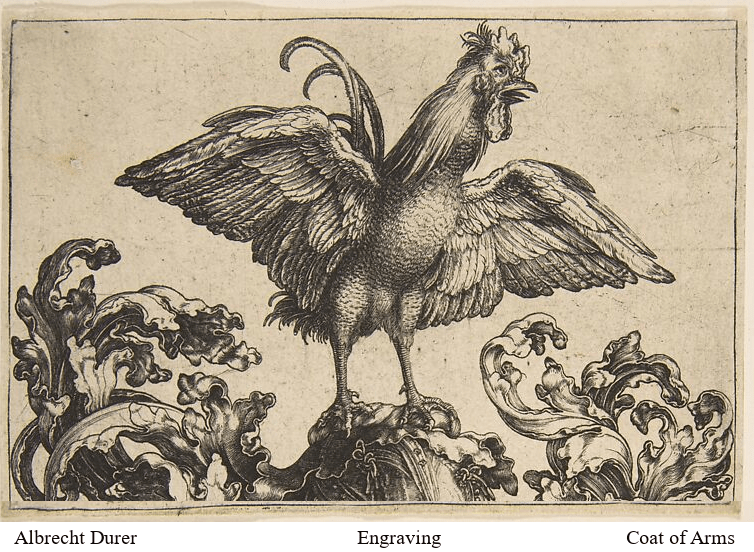
“Mouse Face”
From the series
“Stories For Children”
As soon as the fox was out of sight Rowena, (the chicken,) ran out from behind the tree, and stood in the path, uncertain what to do. She wanted to head straight for home, but couldn’t because she would be bound to run into the fox or his friends on the way. But to go the other way would be to get further from her home. As she stood there lost in thought and uncertain what to do, the crow flew down from his tree and landed right in front of her.
It might have been simply a coincidence, but Jason, the crow, seemed to want Rowena to continue on the path down to the lake. He stood there in the path in front of the chicken, and took several bold and determined steps in the lake’s direction. When Rowen didn’t move, he looked over his shoulder and made a loud cawing sound not once, but three times, and then a forth caw, somewhat quieter after a little pause. The little quieter exclamation, following three loud caws, is understood to act as a kind of question mark, or so I have been told.
All this was happening at a time before chickens and crows had really learned how to talk to each other. And even much later when they had learned to converse, there was often confusion and misunderstandings.
It was a situation like when a tourist in a foreign country asks directions, and the native, unable to explain, simply walks off in the correct direction waving a hand, so the crow indicated the way one hop at a time, looking over his shoulder to see if the chicken would follow him. So the two of them headed for the lake which was some distance away.
Why was the crow so concerned to look after Rowena in the first place? First of all, because they were both birds, birds who hop along on two feet, and birds are not fond of foxes. Secondly, it was Rowena who had exclaimed, “Don’t chase the crows away, they probably think they are chickens, just like us.” Jason the crow, might not have exactly understood what Rowena was clucking when she clucked it, but he understood nevertheless.
Rowena was extremely curious about the lake. From the chicken coop she had often looked at the lake in the distance and wondered what it could possibly be. This is what she thought. The lake must be a piece of the sky that fell down and landed on the ground in the distance. It was the same color as the sky, and it even had clouds in it, if there were clouds above. Rowena was completely shocked and confused when she arrived at the edge of the lake with the crow and discovered that it was completely wet, and made up entirely of water. Then she realized what a lake was because in the yard near the chicken coop the children had a little swimming pool, it also often looked like the sky, and was wet all the time, and she had more than once gone swimming in it.
Rowena ventured out into the water and swam about for a while, and the crow stood by the shore and examined various twigs and leaves, but in the distance he noticed three sets of eyes looking at Rowena and himself. It was the three foxes who, not having found the chicken on the path to the farm, had returned in search of her.
Then it was evening, and as always, a little later it was night. Then it was cold and Rowena began to feel a little homesick. She wished she had never decided to go for a walk, and she did not care that lakes are made of water, and she had no interest in what foxes like to eat. She longed to be going to sleep nestled in the chicken coop, all in a heap with her brothers and her sisters, where it was simply impossible to tell where one chicken left off and another began. She looked around for a spot to settle down for the night and the crow, who was looking on from above, flew down and landed on a log that was floating near the shore.
The log the crow landed on was not all by itself, it had three brothers and one sister. The brothers were three logs from a similar tree, and the sister was a log from a birch tree with different markings and a different color bark, mostly flaked off. The five logs were tied together with clothesline rope that had been cut into three foot sections with a jackknife. The clothes that the clothesline rope had been holding up were scattered all over some persons yard, but that was over a year ago, and the rope had been long ago replaced.
It was two brothers that took the rope, and used it to tie together the logs to make a raft. On their raft they had placed two milk crates containing a shoe box with six bananas, and several comic books all missing their covers. Stuffed in between the milk crates was a quantity of straw which has been intended to be used for pillows. There were also two pillow cases, also from the yard where the clothesline rope had come from. When the clothes from the yard had been folded it was discovered that the two pillow cases were missing, and the woman who discovered the missing laundry simply assumed that the wind blew them away, and spent a long time looking for them. The pillow cases were white with little blue flowers, and now, somewhat faded, were tucked between the milk crates and the straw.
The boys had been planning to run away from home but their plans were disrupted because their father moved the family to Alabama, where he had secured a job selling used shoes door to door, so the raft was never used.
Rowena settled down in the straw to go to sleep for the night. The crow also went to sleep, perched on the top of one of the milk crates, but the chicken had difficulty sleeping. She kept hearing rustling sounds behind her head, and sometimes she woke up because of tiny squeaking noises. The squeaks were coming from a little mouse who found herself trapped between Rowena’s head, and the back corner of her milk crate. I refer to the milk crate as ‘hers,’ because she and her family had been living there for almost a year, and no chickens had bothered to visit them.
During the night, as Rowena slept and the mouse struggled to get comfortable, a strong wind began to blow. It was a hurricane sort of wind. The little raft struggled up and down and shook back and forth, until its rope broke and it launched itself out into the lake. When morning came the crow, the chicken, and the mouse were way out in the middle of the lake bobbing up and down, and all was calm. It was just a few minutes after Rowena woke up that the hay in the milk crate moved slightly and Rowena found herself face to face with the mouse. The mouse had not slept very well and so was not quite awake, but she completely understood her great danger; or what she imagined must be her great danger. She could see that she was trapped in the corner of her milk crate and was looking into the visage of the most hideous, gigantic face she had ever seen in her short life.
Just try to picture yourself in the situation of that mouse whose name, by the way, was Clara. She had been given the name Clara because her squeak had a very slight clarinet type of sound. Who named her Clara I have been unable to ascertain yet, but you will just have to take my word for it, but even so, it is not germane to the dire mouse situation I am trying to describe for you.
As I was saying, imagine you are like that mouse, and have found yourself trapped in the corner of a dark room. In an open door, just a few feet away from you there is a gigantic repulsive head about ten feet high, and eight feet from ear to ear. This is a face that has hysterically malevolent eyes the size of watermelons. Below the watery watermelon eyes is some sort of beak that looks like the jaws of one of those automobile wrecking machines found in junkyards. Death is inescapable, death is at your doorstep, but first there is going to be some dismemberment!
I’m sorry, this will not do. This is supposed to be a children’s story, of the kind that is read in the children’s section of the library on Saturday morning, and therefore words like ‘dismemberment,’ would seem to be very out of place. Little children, even those eating chicken Mcnuggets, would have trouble visualizing things like dismemberment, even though it is actually part of their everyday carnivorish existence.
But in that situation, backed into a corner by a gigantic birdlike monster, and in the last moments of your earthly existence, you would have no idea what to do, would you? This is only because you do not have the intelligence of the average mouse. Either that, or Mother Nature did not bother to give you the necessary resources to deal with that eventuality.
But Clara knew exactly what to do. She leaped instantly from her corner directly onto Rowena’s face, and grabbed hold for dear life. Rowena did what you yourself would certainly do if you found a mouse suddenly attached to your face. She took two hops rapidly backwards, and then shook her head violently left and right. Clara was thrown completely from off of Rowena’s face, and also clear of the raft, and disappeared under the water leaving a trail of bubbles down into the depths. In the milk crate, under the straw, her little children, two boys and three girls, huddled together in terror, not knowing if they would even see their Mommy ever again.
Richard Britell
August, 2024
“Sir Isaac Newton’s Cat”
From the series
“Stories For Children”
After a long while the mouse came to the surface of the water. The mouse was Clara, that Rowena, the chicken had thrown into the lake. She didn’t want to harm the mouse but being thrown into the lake was the direct result of Clara jumping onto the chicken’s face. Clara squeaked desperately for help, not being able to swim. She was begging what she imagined was her enemy for help, but what choice did the poor thing have?
Rowena reached down with her beak and took hold of Clara’s ear and plucked the mouse out of the water and placed her on the raft. Rowena placed her foot on the mouse’s tail so she would not be able to repeat the face attack. The mouse face attack, it should be noted, is involuntary, and only used when there is no possibility of escape. Even so, it has very often happened that a terrified mouse has launched himself directly into the open mouth of an enemy. Even when this has happened, the mouse usually will survive because they are most often spit out. I mean, think, wouldn’t you spit one out?!
A mouse’s preferred behavior is the art of running away in zig zag patterns. The mouse will run in a way that is entirely unpredictable, and even a scientist who studies chaos theory, and the determination of accidental outcomes, will tell you that no formula can explain mouse movements.
A mouse can run nowhere near as fast as a cat; and if mice are so slow why are there even any mice left in the world? Why have they not been all consumed long ago? The answer to this question can be found in the works of Sir Isaac Newton. I have heard that Newton was a great lover of cats, and it is a well known fact that he discovered the laws of inertia one day watching his cat named Galieo, trying to catch a mouse named Copernicus.
The mouse Copernicus, running full speed, was just about to reach the outer edge of the oriental carpet in Newton’s drawing room. He realized that as soon as his little feet struck the inlaid floor he would lose his traction and so, at the very extreme edge of the carpet he made a sharp right hand turn, stopped suddenly, and then ran directly toward the cat, disappeared between the cat’s legs, and then ran across the carpet in the opposite direction.
Now just consider for a moment, the path of the sun across the sky. The sun inches along very slowly but no power in heaven or earth can change its direction, but a mouse can begin running in the opposite direction in any instant. The cat, which weighs 210 times more than a mouse, can indeed change direction, but it takes altogether longer than the mouse. And so, this is what Newton saw. Galieo tried to stop himself at the edge of the oriental carpet, just as the mouse had, but he was unable to come to a full stop. Instead of stopping, he went head over heels a full three feet beyond the carpet and then managed to ricochet himself off the credenza on which was the bust of Martin Luther. It took Galeao a full two seconds to come to a complete stop, and another half a second to begin running after Copernicus. During that short time Copernicus had climbed a sectional bookcase and disappeared between the second and third volumes of Plutarch’s, “Lives of Illustrious Men.”
When Newton was done laughing about the mouse, he picked up his cat and while stroking him he realized the significance of what he had witnessed. Galaeo could not ‘stop on a dime,’ as the expression goes because of his weight. The heavier the animal the longer it takes them to change direction. This he formulated thus: ‘Inertia was created so that small animals can escape from the clutches of large animals, and therefore the balance of nature can be maintained.’
Later that very day Sir Issaic went for a walk in the park and sat on a bench just a few feet from a statue of one of the famous generals of the hundred years war, I am not sure which one because the inscription had been effaced. Pigeons were roosting on the general’s head and in some bushes nearby were fourteen sparrows who began to chirp and hop around when they saw Newton approaching.
The birds, seeing their benevolent benefactor arrive, all came down and assembled in expectation of their daily treats; but on this occasion the predictable event became a scientific experiment. Newton fed only the sparrows, and the pigeons went away empty handed. Isaac accomplished this by throwing the bird seed a little distance from the assembled birds, and as he correctly surmised, the sparrows always got to the bird seed first, and gobbled up all the seeds before the pigeons could even get themselves off the ground. Since a pigeon weighs 16.5 times more than a sparrow, it takes them exactly 4.5 times longer to get themselves into the air, but the sparrows are so fast that even if you blink, you might not see them take off.
A simple experiment can be conducted by anyone, quite easily. Go to the airport and watch a passenger jet taking off. The airplane is like the pigeon, in that its take off is extraordinarily time consuming. As you watch the plane take off, compare it to how easy and quickly you are able to launch a paper airplane into flight. The difference is because the passenger jet weighs 5.6 billion times more than the paper airplane.
But the forging explanation of the science of mouse movement is of absolutely no use to any mouse stranded on a raft out in a lake. A mouse possesses almost no knowledge of lakes and rafts and so when Rowena relaxed her grip on Clara’s tail, Clara began to run with all her strength, and ran right off the raft and into the water and began to drown again where she had left off before. As soon as Clara’s head became visible above the water’s surface, she was again dragged out of the water and set down on the raft.
While Clara sat there shivering, Rowena gave her a good talking to. Her lecture to the mouse took the form of a long series of clucks, interrupted by somber silences. It is certainly true that mice do not understand the clucking of chickens, but even so, it is not necessary to understand the actual clucks when the content of what is being clucked is so often conveyed by gestures and the inflections, and so Clara began the understand that the chicken meant her no harm, and even more that that, was sympathetic to her situation. With that she summoned all her children to come out from under the straw and present themselves. They all came out and stood in a line frightened and confused.
Now the chicken looked at the crow with an expression that seemed to say, “What on earth are we going to do with them.” The crow had an idea, which was to fetch the leaf of a rhubarb plant and use it as a little raft, to float the mouse family to the shore. With this in mind he flew off and was able to procure a suitable leaf, but no amount of encouragement would suffice to get even the mother to set foot on the leaf, to say nothing of the children, and the idea had to be given up. At long last the crow decided on the most obvious solution, he would take them each, one at a time, by the ear, and fly them to shore.
There was a distinct disadvantage to this plan, because the mouse children were unable to understand what was happening, and so they had to witness a most terrible occurrence, their mother carried off into the distance to God knows where. I am not going to try to describe to you the terror and anguish of the mouse children as, one at a time they were taken away by the crow. The last of them, who was the smallest, was reduced to such a state of shock that he almost never was able to recover, and when he was older he became very introverted, and even when asked some simple question would say nothing and simply shake his head and mumble.
Meanwhile, the crow considered where to deposit the mice. He thought that to just leave them on the shore would put them at risk of being found by the foxes, but he found a suitable hiding place for them. There just happened to be a fisherman, sound asleep on the shore with his fishing rod in his hands, and next to him his tackle box. The mother mouse he deposited in the box, shoving her into a dark corner and he pecked at her head a few times to make her understand that she must stay still and quiet. The idea was simple, simply deposit the entire family into the fisherman’s box, and then, reunited they could go on their way into their bright future, whatever it might be, but it was not to work out that way. Once the last and smallest mouse was deposited in the corner of the fisherman’s tackle box, the old man woke up, gathered up his things, shut the box and headed for home.
Later that evening the wind began to blow, and the raft made its way to the shore and the chicken and the crow found themselves on land, with no foxes in sight, and Rowena began to hop along in the direction she hoped would bring her to her home. It grew dark and her path brought her into the vicinity of the fisherman’s humble cottage. In the dark a light could be seen in the kitchen. From the kitchen came the sound of terrible screams and shouting. Looking in at the kitchen window Rowena beheld the fisherman and his wife. On the counter next to the sink could be seen the tackle box with the lid open. The fisherman had two mice attached to his face, and the wife had three mice trying to find their way out from under her blouse; the five of them doing their best to keep off the dull times,* for the fisherman and his wife.
*Mark Twain, Huckleberry Finn, “and the rats were doing what they could to keep off the dull times for her.”
Richard Britell
September, 2024
 SPAZI
SPAZI 